
DACHSER South Africa expands coastal cross-docking facilities
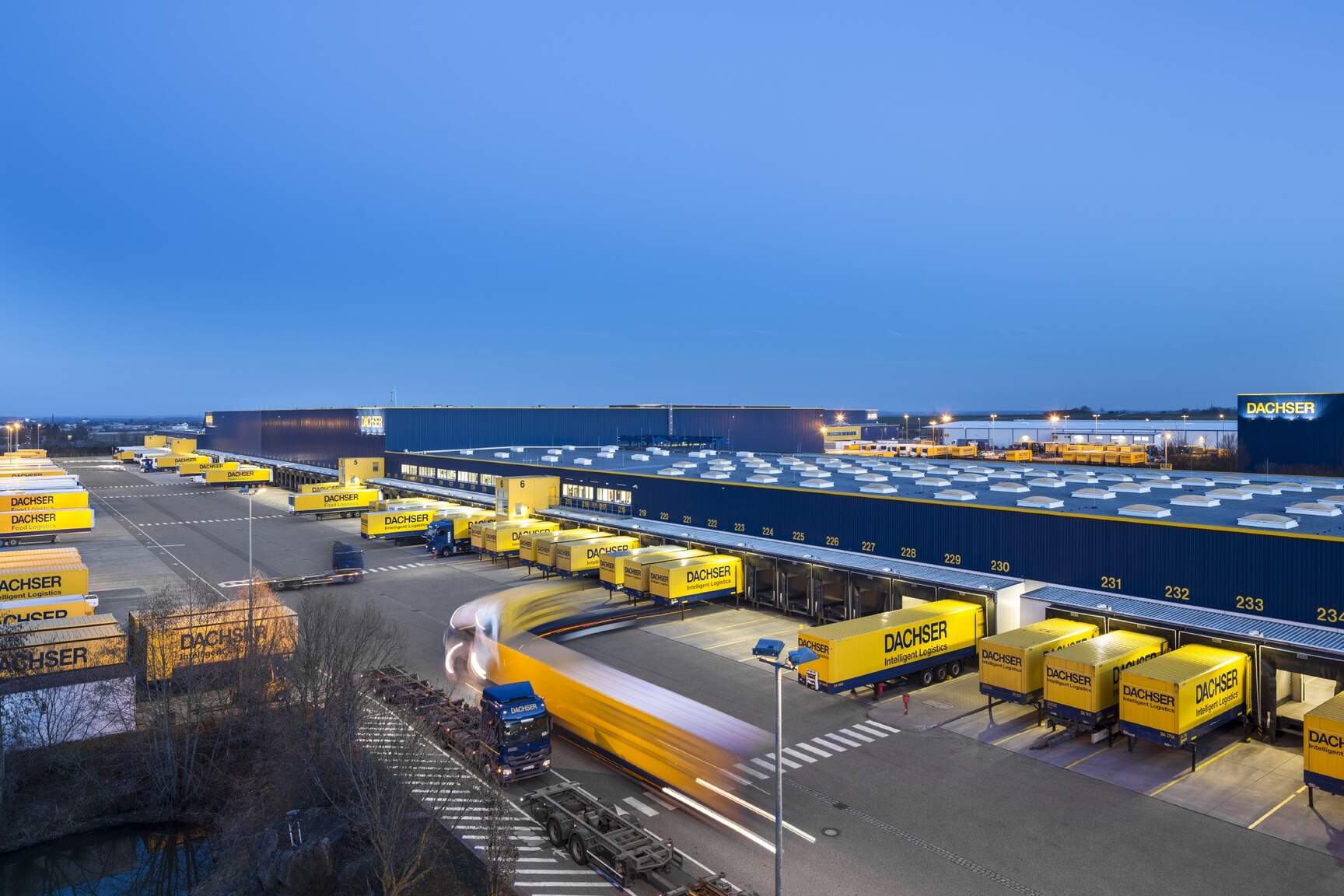
Cross-docking, where inbound cargo is unloaded from an incoming container, sorted and then loaded directly to outbound carriers, is an important logistics strategy that keeps supply chains moving in a productive, effective manner. Logistics leader, DACHSER South Africa, has recently expanded its Durban operations to a new 3600sqm warehouse in Pinetown, Durban.
“The new off-loading and loading bays have increased our capacity to handle a number of containers at a time, enabling us to offer excellent turn-around times,” says Detlev Duve, DACHSER South Africa, Managing Director, “The facility provides a dedicated central site for products to be sorted for delivery to multiple destinations in the most productive way, saving costs. Ultimately, our customers benefit from a more efficient supply chain.”
Deidre Smith, DACHSER Sea Freight Imports Manager, says, “We’re able to consolidate shipments, or even break down larger shipments into smaller loads, for easier delivery. Storage and handling costs can be reduced as products spend less time in the warehouse. Cargo also typically reaches its final destination faster, giving our customers a competitive edge.”
Further to a spacious, well-equipped warehouse, Smith says that experienced staff and effective planning are the foundations of a successful operation. “Skilled staff are vital to the operation and management of the warehouse. From expert inventory control using Warehouse Management Systems, through to our material handling equipment operators and cargo handling teams, we ensure that all our staff are well-trained and clear on the different goods and requirements of our customers.”
Smith explains that the goods that are most conducive to cross-docking are those that are in steady demand, usually higher volume, fast-moving products scheduled in regular dispatches to pre-planned destinations. DACHSER also has the experience to handle large or complex items. “Of course, the preferred cargo to handle is stackable, palletised cargo that fits neatly into racks can be easily transported, but we’ve become experts in handling the odd and awkward cargo too. Taking care of customers cargo and avoiding damages is our top priority, and our Durban handling team has the experience to load the trucks safely and correctly. We also ensure that the appropriate handling equipment is available when off-loading a container and manoeuvring the cargo around the warehouse.”
The DACHSER team handles both Pre-Distribution, where goods are unloaded and despatched according to set distribution instructions, and Post-Distribution processes, usually for retailers, which entails flexible picking and packing according to demand, based on in-store inventory, sales forecasts and trends.
Duve says it is also essential to partner with reputable transporters that offer a regular and reliable service to move the goods from warehouse to customer door.
“With all the right foundations in place, cross-docking has become part of the seamless supply chain solution DACHSER South Africa offers to our customers, which further includes contract logistics, value-added warehousing, customs clearance and customs warehousing services,” says Duve.
About DACHSER:
A family-owned company headquartered in Kempten, Germany, DACHSER is a leading supplier of logistics services worldwide.
DACHSER offers comprehensive transport logistics, warehousing, and customer-specific services in two business fields: DACHSER Air & Sea Logistics and DACHSER Road Logistics. The latter consists of two business lines: DACHSER European Logistics and DACHSER Food Logistics. Comprehensive contract-logistics services and industry-specific solutions round out the company’s offerings. A seamless shipping network—both in Europe and overseas—and fully integrated IT systems ensure intelligent logistics solutions worldwide.
Thanks to some 30,995 employees at 393 locations all over the globe, DACHSER generated revenue of 5.66 billion euros in 2019. That same year, the logistics provider handled a total of 80.6 million shipments weighing 41. million metric tons. Country organizations represent DACHSER in 44 countries.
Changes in Italy: an update of the loading restrictions in Europe
In the following you will find the current loading restrictions that apply to Europe (see download). Food transports are excluded from this. This document here will be updated on a regular basis.
Camso specializes in off-road tires, wheels, rubber tracks, and track systems for commercial and powersport vehicles. To reach its customers in Europe as quickly and efficiently as possible, the company entrusted its logistics management to DACHSER as Lead Logistics Provider—a solution with a future.
Camso supplies tires for massive jobs.
When things get really slippery, muddy, gravelly, or slick, that’s when thick pneumatic rollers, rubber tracks, and hard rubber tires prove their mettle. They’re indispensable for the high-performance equipment used in material handling, on construction sites, in agriculture and quarries, and even in outdoor powersports. The message is very clear: the more demanding the terrain, the better.
And that’s precisely what Camso, a Michelin Group brand, specializes in. A global leader in the development, manufacture, and distribution of industrial tires, wheels, and rubber tracks, Camso has more than 8,000 employees in 26 countries across the globe, primarily in Asia, Europe, and North America. It also operates four research and development centers, 23 manufacturing facilities, and an international distribution network in more than 100 countries.
This setup puts as many demands on Camso’s logistics operations as the areas of application put on its products. To keep the company on track for growth and to tap the full potential of digitalization, Camso began reviewing its global and European logistics network some time ago. “Having ten local distribution centers in Europe, each of them independently managed, was no longer in keeping with the times,” says Pierrick Bouf, Supply Chain and Logistics Director EMEA at Camso. “As a result, we reorganized our network around three main distribution centers: one in the UK, one in Germany to cover northern Europe, and one in France to serve southern Europe.”
A reliable partner
The French distribution center in Grans, located near the Mediterranean port of Fos-sur-Mer northwest of Marseille, is operated by DACHSER. “Its location, logistics capacities, and groupage network made it a good fit with our plans to be able to deliver goods to the French market within 24 or 48 hours,” Bouf says. This cooperation would prove successful and resulted in DACHSER being included in the discussion about handing over responsibility for all logistics services to a Lead Logistics Provider (LLP).
"The close collaboration with DACHSER as LLP has made our processes significantly easier and increased our responsiveness in extremely turbulent times", says Pierrick Bouf, Supply Chain and Logistics Director EMEA at Camso.
The LLP would be tasked with orchestrating twelve different transport service providers and ensuring that they deliver an average of 170 shipments per day from the three central shipping warehouses to the target customers in Europe with maximum efficiency and transparency. “In parallel with this new logistics organization, we wanted to improve our services by centralizing and standardizing them and having a knowledgeable point of contact for all logistics-related questions,” Bouf says.
But first, an explanation of the term and the underlying concept is in order: a Lead Logistics Provider is a logistics company that acts as a neutral party in organizing all or at least the essential logistics processes for its customers, regardless of which service provider carries out the operational activity. LLPs are deeply integrated in their customers’ (logistics) processes. After all, this comprehensive service approach isn’t restricted to conducting transports or performing terminal handling or warehousing services; it also involves designing, implementing, and organizing supply chains, optimizing transport and warehouse planning, coordinating suppliers, and integrating the latest (communication) technologies. Customer-specific services such as customs clearance, packaging management, and value-added services also fall under the range of LLP responsibilities.
Delivering tires to customers throughout Europe.
The “premiere league of logistics”
That’s why Stefan Hohm, Chief Development Officer (CDO) at DACHSER, considers LLPs to represent the “premiere league of logistics”: “The LLP concept requires a comprehensive and in-depth understanding of the customer’s supply chain and all associated processes. Using the network and IT expertise that we have acquired and grown over the years, we continue to develop and refine this system to create sustainable complete solutions that our customers need for their business model. In addition to the shipments transported by DACHSER, our portfolio will also incorporate the transparency and management of other logistics providers.”
This made Dachser an obvious choice as Camso’s LLP. “In our collaboration to date, Dachser has proven that it’s capable of organizing and allocating transports exactly the way we want. Following our shared experience with the Dachser-operated Camso distribution center in France, we then began working to expand the LLP solution to the other two distribution centers in the UK and Germany,” Bouf says. “Dachser is very familiar with our products and how we work, and it understands our special service-level requirements when shipping to another country.”
On the DACHSER end, the various strands of the Camso LLP project all converge in the hands of Martin Poost, Department Head Lead Logistics Provider. “All supply chain information flows into the DACHSER LLP Control Tower,” Poost says. “That’s the center where all data, independent of company and location, is pooled and monitored. To do this, we transform the physical supply chain processes and the specific customer requirements into an appropriate IT logic. We then display all relevant data in a transparent and traceable format on the DACHSER Supply Chain Visibility platform, where it can be accessed at any time.”
For this to work, the Camso and DACHSER systems have to be able to “talk” to each other and allow data to be shared in real time without losing information. According to Poost, this is a demanding challenge that, together with Camso, DACHSERsucceeded in transforming into a practical solution. Paving the way for this success was a working group with IT teams from Camso, DACHSER, and technology partner Siemens. “Working closely together, we were able to design the interfaces and the data structure in a way that ensures that communication between our ERP system and the DACHSER Supply Chain Visibility platform functions securely,” Bouf says.
An integrated overall concept
Camso had formulated clear expectations for DACHSER as LLP. It wanted an integrated concept for warehousing, distribution, and management of the various transport providers handling the groupage shipments, partial and full loads, and package deliveries. To this end, DACHSER was tasked with managing and controlling all transports and service providers, including transmitting shipment data to everyone involved, printing barcode labels, and managing proofs of delivery. And last but not least, the LLP is responsible for validating invoices. In other words, it was entrusted with the entire portfolio of highly developed and practical supply chain management processes.
For the Dachser LLP team led by Martin Poost, and for their partners at Camso, working together to draw up the detailed requirements and specifications once again showed very clearly that DACHSER could provide the orchestration of all required logistics services far more efficiently and reliably than if Camso had to create a suitable structure itself.
A glance at the Control Tower and the functionalities of DACHSER’s Supply Chain Visibility platform shows just why that is: “Here, all transport-related data, independent of company and location, is pooled together in one system and presented graphically, making it practical for use in different media,” Poost says. “This enables us and customers, regardless of location, to see where any shipment is at any given time and to intervene if necessary.” Thanks to DACHSER’s proprietary Supply Chain Visibility platform, everyone involved in the transport has access to the latest information and can contact other parties directly if desired, regardless of which type of transport is used. “We cover full and partial loads as well as groupage and parcel services. And it’s all part of a single solution for procurement and distribution logistics,” Poost says.
Easy to use
As the logistics experts know, digitalized and automated processes are only as good and worthwhile as their level of acceptance in day-to-day operations. “That’s why we pay particular attention to user acceptance of all the tools we use,” Poost says. It’s crucial that solutions be easy to use, for example via smartphone, app, and special web services.
If, for example, a rubber track needs to be sent from Germany to France, the Camso systems transmit the shipment data via an EDI to the Supply Chain Visibility platform, which Camso uses to control and release the shipment. The platform then transmits the data to the selected transport provider, who ultimately accepts the shipment. This system is used in transport scheduling, in the transit terminal, and by the drivers. “This means everyone can always see where the track is on its journey through Europe,” Poost says. That’s more than conventional tracking and tracing. “The major advantage of consolidating all shipment data in a single system is that it enables us to work for and with customers from an early stage to plan all transport services. For example, to arrange delivery in accordance with the recipient’s available time slots.” After the rubber track is delivered in France, the proof of delivery is transmitted, enabling the immediate final review of the transport costs indicated on the transport provider’s EDI invoice. “This carrier management,” Poost says, “is a well-oiled process and everyone has their part to play in it.”
The Control Tower and the DACHSER Supply Chain Visibility platform also provide tangible benefits when it comes to analysis, for instance when creating reports or Excel tables and forecasts for such things as order planning and timely provision of container and transport capacities. And last but not least, Poost says, another key aspect of the Control Tower is quality assurance. “When evaluating the services agreed with suppliers and transport providers, an appropriately qualified LLP partner has the professional and technological edge over customers when this evaluation can be explicitly ‘based on daily practice, for daily practice’.”
Poost’s and Bouf’s preliminary verdict on the Camso-DACHSER LLP partnership is thus a positive one. “Especially during the pandemic and the Ukraine crisis, the close collaboration with DACHSER made our processes significantly easier and increased our responsiveness in these extremely turbulent times,” Bouf notes with satisfaction. This also includes the parties having long since established a trusting and mutually appreciative connection on a personal level. “Since the start of our collaboration more than five years ago, we have had weekly operations meetings where we can discuss the events of the previous week and plans for the coming week, and where many potential problems can be anticipated and addressed proactively,” Poost says. “For all the technology it uses and all the progress it is making toward digitalization, logistics is still and will remain a ‘people business’—even, and especially, for a Lead Logistics Provider.”
Experts estimate that digital connectivity will reach a data volume of 400 trillion gigabytes as early as 2030. Whether or not that happens, one thing’s for sure: data collection and processing are increasingly determining and changing the way we live and work. And one other thing is true: handling data responsibly makes life easier and offers many opportunities. Especially in logistics.
“When it comes to Brexit, many companies have their head in the sand”
The Brexit is complete and the transition phase will be history in a few weeks. No matter what agreements the EU and Great Britain may reach in the short term, January 1, 2021 will mean a deep cut for the movement of goods to and from Great Britain. Steffen Wiese, Head of Sales, European Logistics, North Central Europe at DACHSER, explains what companies urgently need to bear in mind and some even run the risk of oversleeping the preparations.
Would you say it’s still possible to avoid a hard, no-deal Brexit?How would a hard Brexit affect goods transport involving the UK?
There’s still a chance that a deal could be agreed. But the closer we get to the deadline, the less hope there is. DACHSER is definitely readying itself and its customers for a hard Brexit to ensure we’re prepared for all eventualities.
Post-Brexit customs clearance will make transporting goods vastly more complicated, expensive, and time-consuming. We expect a hard Brexit to majorly disrupt transports, especially at the beginning of next year. We’re noticing that some companies have already taken action and have moved operations to locations with the EU. In light of new customs clearance procedures, some business models are no longer very practical and will have to be revised. B2C shipments will become more expensive, even if simpler procedures are introduced for goods of up to a certain value. It just won’t be worth it for many senders. Since shipping times and costs for supplying the European market from the UK will also increase, many senders have already moved their distribution centers to the EU.
Are companies, including DACHSER customers, in Germany and the rest of Europe prepared? Where do you see room for improvement?
In addition to the well prepared companies, there are also quite a few that still need to take urgent action. They’ve waited too long, which will lead to problems—at the latest starting January 1. This holds especially true for companies that have up to now exclusively served the European domestic market, as they often lack the requisite customs expertise.
Many companies actually expect that a deal will mean everything remains as it is. What’s more, the Covid-19 pandemic has largely eclipsed Brexit as a topic in the public eye as well as at many companies.
But it’s important to know that no matter what happens on the political stage over the coming days and weeks, customs clearance will definitely be a hot topic among senders and recipients of goods transported between the EU and the UK. This means that preparation is non-negotiable.
A more general question: What must a company intending to export goods to or import them from the UK as of January 1, 2021 take into account?
Senders first have to check the extent to which their supply chains are affected. Special attention must be paid to preparing the information and documents required for customs clearance so that we, in our role as logistics provider, can take care of the customs formalities relating to imports and exports. This information includes the EORI number. Moreover, obtaining customs authorization from the respective importer is essential for processing shipments to and from the UK. For this reason, we are asking our customers to notify their recipients that they must provide us with the importer’s name so we can request the necessary authorization.
DACHSER itself is well prepared to make future customs clearance for goods transports between the EU and the UK as smooth as possible. It’s now up to senders to once again check thoroughly that they have made all necessary preparations. On our website, we’ve published a checklist that allows our customers to see at a glance what they have to be aware of. And of course, DACHSER’s local contact persons are always ready to answer any questions.
It’s absolutely clear what the worst-case scenario would be: goods remain stuck with the sender and we are unable to collect them. The transport can start only once all the paperwork required for customs clearance has been made available. Starting January 1, there will be no transition period or exceptions and the paperwork cannot be submitted later. These are the conditions that logistics providers must now observe. In this worst-case scenario, customer warehouses would overflow as the goods remain where they are.
What specific preparations has DACHSER made as a logistics provider?
DACHSER has been preparing for Brexit for years now. We formed an internal project team made up of experts from all areas of the company. It’s this team’s job to address all aspects of Brexit—from customs clearance, volume monitoring, and traffic routing to IT, staffing, and communications.
To prepare for all eventualities, we’ve invested particularly in customs and created software solutions to help ensure customs processes are performed efficiently. As well as adding resources to our IT infrastructure, we’re making sure that DACHSER UK and DACHSER Ireland both have sufficient personnel—especially those trained in customs matters. On the mainland, our global logistics network provides us with ample expertise and resources. We’ve also formed an internal task force to support our colleagues in the UK and Ireland as well as our distribution platforms in the EU starting January 1, 2021. Task force members are being trained on how the various systems work so we can stem any additional costs, and our country organizations are working closely together to minimize any disruption. And because we have AEO status in the UK and in numerous EU countries, we can see to it that goods clear customs as quickly and seamlessly as possible.
What’s the situation in the Republic of Ireland? The majority of transports to and from Ireland pass through the Channel. Are there alternative routes?
There are bound to be obstacles when transporting goods to Ireland. But what’s particularly unclear is how things will work with Northern Ireland, which as we all know is a very political issue. There are alternative routes to Ireland and while all options involving ferry companies are being explored, these will ultimately lead to longer transit times.
After years of Brexit preparations, what lessons have you learned?
It’s all about staying flexible in the face of inevitable surprises, especially political ones. Personally, I hope that the nightmare scenarios predicting thousands of trucks stranded on each side of the Channel don’t come true and that the authorities also do their part to implement the process efficiently. I’m also curious to see how the economy develops and whether Brexit will scare other countries away from pursuing any desire to leave.