Select a topic above and receive regularly updates by email.
Subscribe to these filters
Receive regularly updates of the selected filters by email.
Your subscription has been created successfully
For your security you need to activate your subscription. We have sent the activation link to your e-mail address.
Data validation failed on server.
Unfortunately, the validation of your entered data failed on server.
IP-adress denied
Unfortunately, your IP is blocked for about 1 minute. You have sent too many requests.
General system error
Unfortunately, there was a problem processing your request. Please try again later.
DACHSER continues charter flights in May
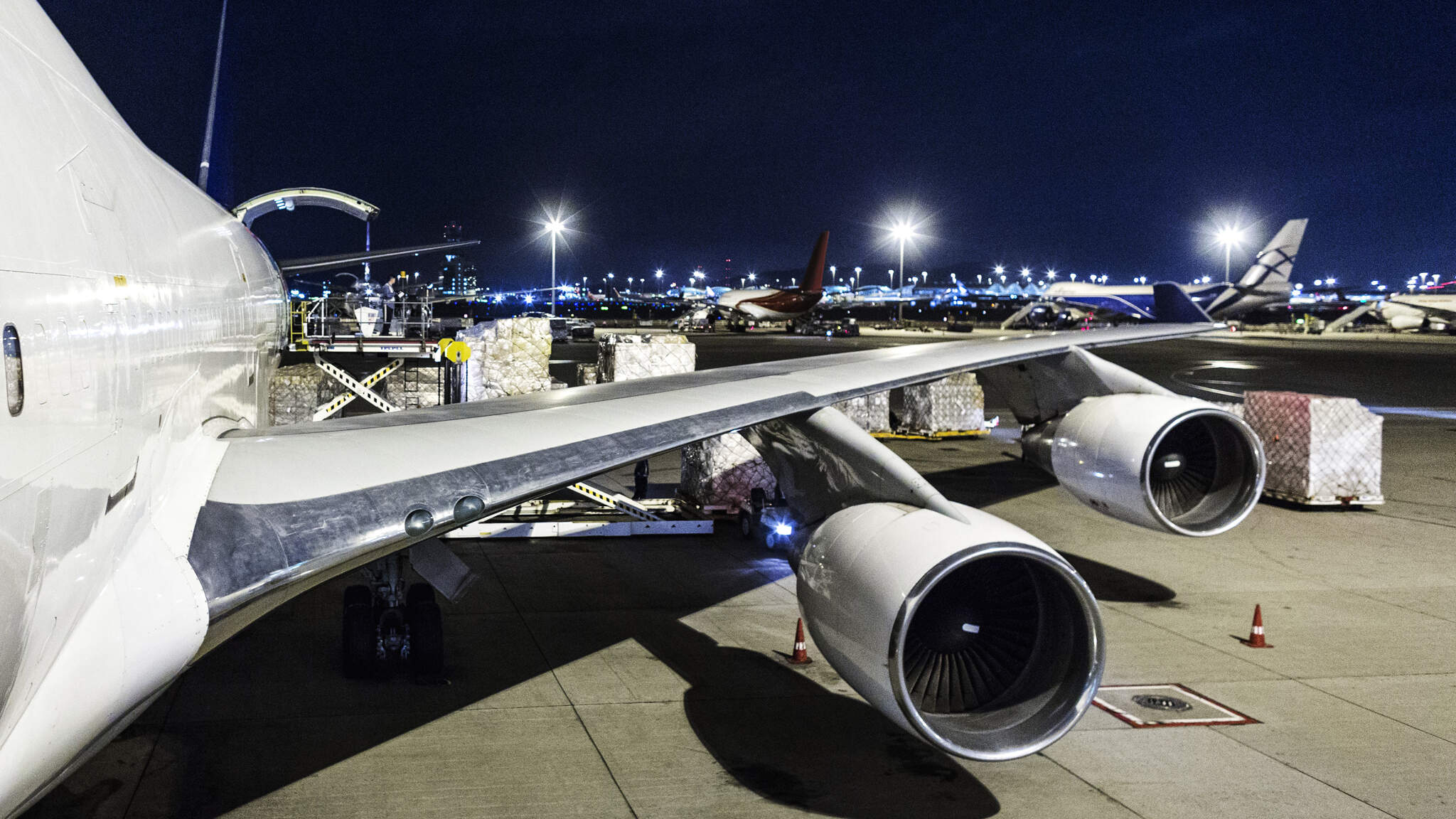
In addition to charters between Asia and Europe, the logistics provider will organize further transpacific flights to cover the North and South American markets. One such change is the addition of the new Shanghai—Los Angeles route.
DACHSER completed its 30th charter flight since the pandemic began</span>
With capacity on the air freight market still very limited, DACHSER Air & Sea Logistics is offering additional dedicated charter services from Asia to the United States. It was just at the end of April that DACHSER completed its 30th charter flight since the pandemic began.
Following on from the first flight on the transpacific route from Hong Kong to Los Angeles in the last week of April, the logistics provider expanded its charter program as May progressed to include an additional route from Shanghai (PVG) to Los Angeles (LAX). DACHSER uses its extensive North American network of 14 branches in the US to distribute goods within North America and further to South America, where the company has 13 branches.
Continuing demand
“We continue to see demand for air freight services from Asia to the US, and not just for medical protective equipment,” says Timo Stroh, Head of Global Air Freight at DACHSER. “Our charter flights allow us to respond to our customers’ needs and offer them robust and effective solutions. This in turn gives them access to premium capacity with a reliable transit time, which ultimately helps them improve their supply chain planning.”
In addition to its transpacific charters, the logistics provider is continuing to operate transports from Asia to Europe.
For a sustainable society: More and more NGOs are taking action around the world
In the course of globalization, internationally networked non-governmental organizations or NGOs are playing an increasingly important role. DACHSER’s partnership with children’s aid organization terre des hommes demonstrates how a company can support an NGO over the long term.
Environmental protection, human rights, joint development projects, migration, anti‑discrimination: the importance of non-governmental organizations, or NGOs, for society is great. Independent of states and governments, they advocate for social, socio-political, or environmental issues. The coronavirus crisis is making the work of NGOs more urgent, as humanitarian aid in developing countries is now more important than ever. This is a challenge for many such organizations, as their work is often hampered by travel bans as well as difficult working conditions and hygiene measures on site. In addition, many of those who donate are less willing to do so in times of crisis. Yet this is exactly what NGOs depend on, because in addition to membership fees, donations are their main source of financing. Transparency with regard to an organization’s cash flow and what it achieves with those funds is now all the more critical for strengthening donor confidence. Many NGOs inform their donors regularly via press releases, newsletters, or on their website about individual projects and the use of funds. NGOs are also monitored by auditing companies and the relevant tax authorities to ensure that they are using donations correctly. A “donation seal” from the German Central Institute for Social Issues (DZI), headquartered in Berlin, helps engender even greater trust on the part of the donors. The seal guarantees that the respective NGO is trustworthy and that the work they do is respectable.
DACHSER supports terre des hommes
According to estimates, there are currently tens of thousands of NGOs worldwide, providing medical care in crisis areas, looking after refugees, supporting micro-enterprises in the start-up phase, and more. One of the leading children’s aid organizations is terre des hommes. Founded in Germany in 1967, the organization protects children from slavery and exploitation, cares for the victims of war, violence, and abuse, and provides education and training for children. The German arm of terre des hommes currently supports 386 projects around the globe. International logistics provider DACHSER has been supporting the work of terre des hommes in South Asia, southern Africa, and Latin America since 2005. In keeping with the principle of “helping people to help themselves,” terre des hommes implements local aid projects to permanently improve the lives of children and the others in their villages. “As a global logistics company, we have operations around the world that bring people, markets, and manufacturing closer together. Yet not everyone is experiencing the benefits of globalization. It is our responsibility to stand up for these people and improve their living conditions,” explains Bernhard Simon, CEO at DACHSER.
By extending its contract with terre des hommes through 2025, DACHSER will be supporting the North Indian state of Bihar as well as projects in New Delhi and Uttar Pradesh. Taking a look at the latter, Ingrid Mendonca is coordinating an aid project there for terre des hommes Germany and is enthusiastic about the commitment of the locals, especially now during the coronavirus pandemic. “Not only do the youth groups support their own communities, sew masks, and procure food, but they are also getting in touch with young people in other villages, districts, even states and getting organized,” Ingrid Mendonca says. “Their commitment to improving the situation is inspiring.”
DACHSER employees also benefit from their employer’s commitment to social responsibility and can support terre des hommes projects on site. For example: Melanie Diem, Team Leader Project Management at DACHSER, coordinated a sustainability project by terre des hommes and DACHSER in Livingstone, Zambia. DACHSER Young Professionals and students from the terre des hommes network took part in the project. “The participants’ commitment to the cause was very impressive. DACHSER employees have the opportunity to immerse themselves in the work of an NGO, an area with which they might otherwise never come into contact,” Melanie Diem explains.
A special kind of commitment
The partnership between DACHSER and terre des hommes shows that together, a commercial company and an NGO can achieve amazing things. “Our collaboration with DACHSER is particularly valuable and important to us because it involves a huge personal commitment and open and honest dialogue,” says Stephan Stolze, head of the fundraising department at terre des hommes. “DACHSER’s employees and CEO Bernhard Simon in particular are deeply involved in the terre des hommes projects funded by DACHSER. They want to know how the people on the ground are doing and to what extent DACHSER’s support succeeds in helping to improve the living conditions of the local people.” In 2018, DACHSER’s commitment was recognized with the German CSR Award in the “Social Engagement” category. Partnering with an NGO makes DACHSER a pioneer, as only a few companies in Germany support internationally active NGOs. “Larger, international companies in particular should seriously consider the UN’s 17 Sustainable Development Goals and support projects in these areas for as long as they can,” Stephan Stolze says.
Step by step toward the goal — Sea freight groupage containers facilitate the continuous flow of goods
In turbulent economic times, sea freight groupage containers are becoming increasingly popular. Production bottlenecks, fragile global supply chains, and a container shortage have further increased the demand for small and predictable shipment sizes in sea freight. Michael Kriegel, Department Head DACHSER Chem Logistics, explains the service that enables a reliable flow of goods in sea freight. He also talks about why a good network connection is crucial, especially for goods with high security requirements.
Sea freight groupage containers facilitate the continuous flow of goods
Companies are already analyzing their global supply chains and increasingly shifting their shipments to sea freight groupage (called “less than container load,” or LCL for short). The big advantage of groupage for customers is that they can ship smaller loads without having to pay for a full container. As a result, they can maintain a continuous flow of goods, even in the event of production bottlenecks, and also respond more flexibly to seasonal fluctuations. LCL containers are often prioritized over full containers in the loading process, which provides an additional time advantage and allows for better planning of transportation times. DACHSER markets what it calls “consolidation boxes” - customers pay only for the space they actually occupy in the containers. In addition, the company plans departures weeks in advance rather than only once production volumes are known. This means that containers, which are still in short supply, can be pre-booked in good time and customers retain flexibility when booking.
Many companies, especially in the automotive, life science, and healthcare industries, have been using groupage shipments by sea for years. But this service is also suitable for the chemical industry, which places particularly high demands on safety and transparency during transport - and thus needs a logistics provider with the appropriate experience. DACHSER is one such provider. It set up a purchasing partnership with the German Chemical Industry Association (Verband der Chemischen Industrie e.V., or VCI) in 2009. This successful alliance for European groupage shipments from Germany was then expanded in 2015 to include air and sea freight. Member companies of the association now benefit from globally standardized core services in the groupage network - transport, warehousing, and IT solutions. All this specialist industry experience has been pooled in the DACHSER Chem Logistics team.
“In shipments from customers in the chemical industry, which sometimes contain dangerous goods, the decisive factor is always safety. We have to protect life, limb, and the environment,” says Claus Freydag, Managing Director DACHSER Air & Sea Logistics Germany. “DACHSER also boasts global dangerous goods expertise in the groupage container segment and covers all LCL-compatible IMO classes in its own network and in its partner network,” he adds. The company’s central dangerous goods management system and its more than 250 regional safety advisors monitor compliance with special regulations governing the transport of dangerous goods. In addition, many DACHSER employees are trained annually in the particular requirements of chemical logistics.
For sea freight groupage, the sea freight team consolidates various LCLs and loads them into a full container. This optimizes utilization of container capacity, which in turn provides the basis for economical transport costs. Maximum utilization also improves transport sustainability while reducing the risk for individual companies at a time when supply chains are fragile. “Ports around the world have been clogged for months, causing significant delays - and making it rare, if not impossible, for shipping companies to stay on schedule. Instead of sending a full container on its way, which can get held up if loading windows are missed, more and more customers are opting for sea freight groupage containers. This reduces their risk by spreading it over several departures and ships and ensures a more timely transport,” Freydag explains.
Intelligent logistics solutions and a strong network are crucial
Demand for LCL services will continue to grow, even apart from the impact of the pandemic. That’s why DACHSER, as a market leader in the German and European groupage market, has also expanded its maritime LCL network to include 70 weekly direct services to and from Germany. “With a focus on the main global routes, we are systematically expanding our dangerous goods capacity as well. This of course means serving the major markets in both the eastern and western hemispheres, such as China, India, and the US,” Freydag says. In 2021, DACHSER shipped around 19,700 cbm of dangerous goods as LCL with customers in the chemical industry. Dangerous goods thus already represent 15 percent of DACHSER ASL Germany’s LCL business. In addition to the usual port-to-port services, DACHSER also operates various direct import services to the hinterland or other European cities. For example, once a week LCL groupage containers travel directly from port locations such as Hong Kong, Shanghai, and Ningbo to ports such as Hamburg and Bremen - but also with direct loading to Frankfurt, Kaufbeuren, Cologne, Munich, Nuremberg, Stuttgart as well as Copenhagen and Gothenburg. Direct loading minimizes the risk of cargo damage and provides additional safety by eliminating deconsolidation at the transit terminal.
Furthermore, this increases profitability and achieves additional lead time advantages by rectifying bottlenecks in the port. “DACHSER’s global network connects all groupage transports on land and water. We link our own sea freight groupage container services to and from Germany to the comprehensive range of services offered by DACHSER European Logistics, thus enabling end-to-end service throughout Europe,” Freydag says. For storage and unloading, DACHSER is increasingly using its own branch infrastructure in addition to the standard container freight stations (CFS) at the ports. When port capacity is limited, companies thus benefit from additional dispatch quality and shorter transit times.
This concept, in keeping with the idea of “everything from a single source” links the European overland transport network with the global sea freight network - a feature that not every company can offer. “Thanks to the end-to-end solution of our LCL product, which goes beyond just sea transport, we can maintain high quality across the aforementioned carriers and offer transparent traceability of the goods,” Freydag adds.
The past two years have seen risk minimization in the global movement of goods become a crucial factor for success. To take full advantage of LCL shipping, it is crucial that pick-up and onward carriage are also handled in an integrated manner, thus ensuring expertise in the safe transport of dangerous goods along the entire transport route.
“Employee connection and loyalty is what makes DACHSER stand out”
From one-man company to global player – In its 90-year history, DACHSER has become an international heavyweight in the field of logistics. But how has the logistics provider benefited in that time from the loyalty of its employees and its structure as a family-owned company? Dr. Andreas Froschmayer, Corporate Director Corporate Development, Strategy & PR at DACHSER, explains.
Kempten, September 10, 2020 – Dachser’s Rheine logistics center is creating more space for storage and value-added services. Construction is underway close to the company's site on a new distribution center, which will go into operation in October 2020. The heart of the facility on Sandkampstrasse is a 20,800 m2 logistics terminal with 26 loading gates for trucks and up to 36,800 pallet spaces. In addition, there is some 1,200 m2 of office space.
Dachser Rheine will use this modern new facility to consolidate existing warehouse locations in the surrounding area while ensuring additional capacity for future growth. This enables the logistics provider to optimize transport flows and operating conditions. The new distribution center will be operated for customers in various sectors, including the manufacturing industry, healthcare, DIY, and the textile trade. In addition to warehousing, picking, and shipping goods, the employees will provide additional services such as display building, repackaging, special labeling, assembly work, and returns handling, depending on customer requirements.
“In the warehousing segment, we’re seeing continued growth and increasing demand in the region,” says Markus Dodt, General Manager of Dachser’s Rheine logistics center. “A strong local economy, good availability of qualified workers, and favorable transport connections make Rheine and the Münsterland region an ideal location for integrated logistics services.”
Dachser has been present in Rheine since 1990 and currently employs 390 people there. Of these, 60 employees will be transferring to the new location, and a further 60 jobs will be created there in the medium term.