
Select a topic above and receive regularly updates by email.
Subscribe to these filters
Receive regularly updates of the selected filters by email.
Your subscription has been created successfully
For your security you need to activate your subscription. We have sent the activation link to your e-mail address.
Data validation failed on server.
Unfortunately, the validation of your entered data failed on server.
IP-adress denied
Unfortunately, your IP is blocked for about 1 minute. You have sent too many requests.
General system error
Unfortunately, there was a problem processing your request. Please try again later.
Efficient management of global supply chains by DACHSER Air & Sea Logistics
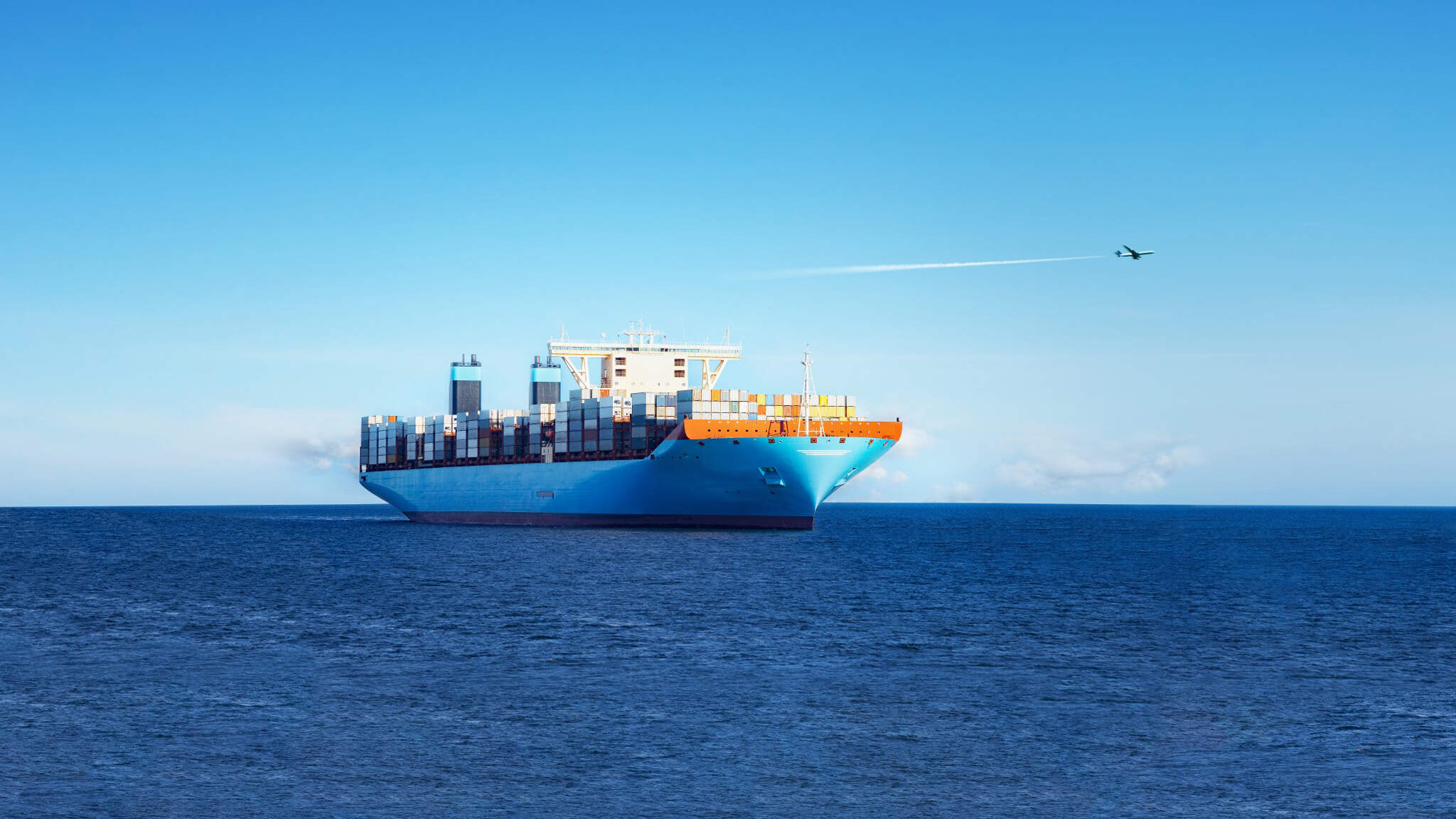
In air and sea freight, operational procedures are characterized by a high degree of manual effort and require coordination with numerous contacts. With DACHSER as a logistics partner, customers benefit from digital solutions for more efficient management of their international supply chains. A single point of contact at DACHSER supports and coordinates their simple and fast implementation.
DACHSER's experience does show that more and more companies are taking advantage of digital applications for managing their air and sea freight. In order to provide customers with a suitable digital solution according to their requirements, DACHSER provides a diverse product portfolio. The offer is based on personalized customer solutions such as eLogistics, the central customer platform of DACHSER or standardized EDI applications and web based APIs. Analog processes can thus be replaced, optimized, or direct connections to the IT infrastructure of DACHSER can be created. The global project management by the experts of DACHSER Air & Sea Logistics does not only cover isolated parts but the entire processes and customer requirements along the supply chain are considered. This holistic approach also takes into account the overarching connection to the DACHSER Road Logistics network. For a smooth implementation, the products are tested by simulating use cases before going into operation.
Advantages at a glance:
Nationwide project management and professional consulting by a competent, single point of contact at DACHSER
Transparency and communication throughout the entire project process
Digital, paperless exchange without e-mails: direct transmission of forwarding orders to DACHSER’s transport management system for air and sea freight (Othello)
Sending status and invoice data to the customer's ERP system
Fully automated, time saving and low-disruption processes
Fast and detailed shipment information in real time
Seamless integration via a single, secure source of data, thus avoiding data silos
Overcoming Africa’s logistics challenges: Dachser South Africa's approach to customs
Trade is the lifeblood of any economy, and the smooth operation of customs and trade procedures is critical. However, logistics companies moving goods across the African continent face a unique set of challenges. These include inadequate road and rail networks, poor infrastructure, excessive official and unofficial roadblocks, significant border delays and complex customs and excise. A lack of coordination among multiple government agencies often results in inefficiencies and bottlenecks that hinder the smooth flow of goods across borders.
The establishment of a single market has introduced new distribution systems for customs and excise revenue, which has necessitated adjustments from logistics companies. The secretariat of the African Continental Free Trade Area (AfCFTA) agreement launched an interim trading arrangement with eight qualifying countries (Cameroon, Egypt, Ghana, Kenya, Mauritius, Rwanda, Tanzania and Tunisia) to test the agreement’s provisions while negotiations are ongoing. Although trading under the AfCFTA started in January 2021, commercially significant trade has yet to happen, primarily due to the delayed Phase 1 negotiations on trade in goods and services such as the negotiations on Rules of Origin (RoO).
Regional integration arrangements further complicate matters. For example, the coexistence of the Southern African Customs Union (SACU) and the Common Market for Eastern and Southern Africa (COMESA) poses specific challenges. Intensive documentation requirements, samples for laboratory analysis, complex tariff classification, and valuation delays are some other hurdles that affect trade facilitation.
In this challenging environment, logistics companies play a pivotal role. DACHSER South Africa has been successfully navigating these complexities for over forty years, providing comprehensive logistics and customs management solutions that ensure the smooth movement of goods. “Our commitment is to provide our clients with a holistic and seamless solution and we see ourselves as an extension of their businesses. This means that we take care of all aspects of the transportation, including customs, storing, handling and the safe delivery of goods from origin to destination.”
To deal with customs challenges, DACHSER focuses on compliance, transparency, and adaptability, says DACHSER Managing Director Detlev Duve. "Compliance with local and international customs regulations is essential, requiring a detailed understanding of these laws and regulations. Transparency in operations helps build trust with authorities and clients, while adaptability allows logistics companies to adjust to changing regulations and market conditions."
In order to avoid significant time delays and unforeseen cost implications, Duve says it’s vital that companies involved in international trade understand and comply with changing regulations and requirements. However, getting to grips with regulatory environments be challenging for companies and divert resources away from core business priorities, making a trusted logistics partner an essential part of doing business.
Duve says DACHSER's teams are well-versed in customs regulations and procedures. “We ensure compliance with customs requirements, including correct classification and documentation, which can save customers considerable time. Understanding Incoterms and maintaining a good working relationship with local customs authorities are key components of our approach. We further consider where costs can be saved or passage expedited. For example, certain processes could entitle an importer or exporter to claim back a percentage of duties paid to customs.”
Customs developments have also created some opportunities for logistics companies and clients to streamline their operations. For example, in South Africa, the government has introduced measures such as accredited client statuses for those registered for customs and excise activities.
Global logistics operations like DACHSER are also able to fully leverage technology to improve their customs handling processes. “Our digital tools assist in accurately calculating duties, tracking shipments, and ensuring documentation is correctly filed, reducing the risk of errors and delays,” says Duve.
DACHSER South Africa also offers value-added solutions for clients such as bonded storage, which allows cargo to be stored for up to two years, improving cash flow for importers. The company further provides an option for clients when a portion of imported goods will be directly exported, sparing them from having to pay duty and VAT twice. “If the client does not need to clear the entire shipment, DACHSER South Africa will clear the goods directly into our bond store and no duty or VAT will be paid until the cargo is moved out,” Duve explains. “If a portion of the stock needed to go to an African country, we would move this out with a bonded truck to that country, where the cargo would be cleared.”
While the customs landscape in South Africa and Africa presents formidable challenges, logistics companies like DACHSER South Africa have found ways to navigate these complexities and deliver excellent service to their customers. Now more than ever, the value derived from using an experienced logistics provider in Africa can lead to significant cost savings.
Camso specializes in off-road tires, wheels, rubber tracks, and track systems for commercial and powersport vehicles. To reach its customers in Europe as quickly and efficiently as possible, the company entrusted its logistics management to DACHSER as Lead Logistics Provider—a solution with a future.
Camso supplies tires for massive jobs.
When things get really slippery, muddy, gravelly, or slick, that’s when thick pneumatic rollers, rubber tracks, and hard rubber tires prove their mettle. They’re indispensable for the high-performance equipment used in material handling, on construction sites, in agriculture and quarries, and even in outdoor powersports. The message is very clear: the more demanding the terrain, the better.
And that’s precisely what Camso, a Michelin Group brand, specializes in. A global leader in the development, manufacture, and distribution of industrial tires, wheels, and rubber tracks, Camso has more than 8,000 employees in 26 countries across the globe, primarily in Asia, Europe, and North America. It also operates four research and development centers, 23 manufacturing facilities, and an international distribution network in more than 100 countries.
This setup puts as many demands on Camso’s logistics operations as the areas of application put on its products. To keep the company on track for growth and to tap the full potential of digitalization, Camso began reviewing its global and European logistics network some time ago. “Having ten local distribution centers in Europe, each of them independently managed, was no longer in keeping with the times,” says Pierrick Bouf, Supply Chain and Logistics Director EMEA at Camso. “As a result, we reorganized our network around three main distribution centers: one in the UK, one in Germany to cover northern Europe, and one in France to serve southern Europe.”
A reliable partner
The French distribution center in Grans, located near the Mediterranean port of Fos-sur-Mer northwest of Marseille, is operated by DACHSER. “Its location, logistics capacities, and groupage network made it a good fit with our plans to be able to deliver goods to the French market within 24 or 48 hours,” Bouf says. This cooperation would prove successful and resulted in DACHSER being included in the discussion about handing over responsibility for all logistics services to a Lead Logistics Provider (LLP).
"The close collaboration with DACHSER as LLP has made our processes significantly easier and increased our responsiveness in extremely turbulent times", says Pierrick Bouf, Supply Chain and Logistics Director EMEA at Camso.
The LLP would be tasked with orchestrating twelve different transport service providers and ensuring that they deliver an average of 170 shipments per day from the three central shipping warehouses to the target customers in Europe with maximum efficiency and transparency. “In parallel with this new logistics organization, we wanted to improve our services by centralizing and standardizing them and having a knowledgeable point of contact for all logistics-related questions,” Bouf says.
But first, an explanation of the term and the underlying concept is in order: a Lead Logistics Provider is a logistics company that acts as a neutral party in organizing all or at least the essential logistics processes for its customers, regardless of which service provider carries out the operational activity. LLPs are deeply integrated in their customers’ (logistics) processes. After all, this comprehensive service approach isn’t restricted to conducting transports or performing terminal handling or warehousing services; it also involves designing, implementing, and organizing supply chains, optimizing transport and warehouse planning, coordinating suppliers, and integrating the latest (communication) technologies. Customer-specific services such as customs clearance, packaging management, and value-added services also fall under the range of LLP responsibilities.
Delivering tires to customers throughout Europe.
The “premiere league of logistics”
That’s why Stefan Hohm, Chief Development Officer (CDO) at DACHSER, considers LLPs to represent the “premiere league of logistics”: “The LLP concept requires a comprehensive and in-depth understanding of the customer’s supply chain and all associated processes. Using the network and IT expertise that we have acquired and grown over the years, we continue to develop and refine this system to create sustainable complete solutions that our customers need for their business model. In addition to the shipments transported by DACHSER, our portfolio will also incorporate the transparency and management of other logistics providers.”
This made Dachser an obvious choice as Camso’s LLP. “In our collaboration to date, Dachser has proven that it’s capable of organizing and allocating transports exactly the way we want. Following our shared experience with the Dachser-operated Camso distribution center in France, we then began working to expand the LLP solution to the other two distribution centers in the UK and Germany,” Bouf says. “Dachser is very familiar with our products and how we work, and it understands our special service-level requirements when shipping to another country.”
On the DACHSER end, the various strands of the Camso LLP project all converge in the hands of Martin Poost, Department Head Lead Logistics Provider. “All supply chain information flows into the DACHSER LLP Control Tower,” Poost says. “That’s the center where all data, independent of company and location, is pooled and monitored. To do this, we transform the physical supply chain processes and the specific customer requirements into an appropriate IT logic. We then display all relevant data in a transparent and traceable format on the DACHSER Supply Chain Visibility platform, where it can be accessed at any time.”
For this to work, the Camso and DACHSER systems have to be able to “talk” to each other and allow data to be shared in real time without losing information. According to Poost, this is a demanding challenge that, together with Camso, DACHSERsucceeded in transforming into a practical solution. Paving the way for this success was a working group with IT teams from Camso, DACHSER, and technology partner Siemens. “Working closely together, we were able to design the interfaces and the data structure in a way that ensures that communication between our ERP system and the DACHSER Supply Chain Visibility platform functions securely,” Bouf says.
An integrated overall concept
Camso had formulated clear expectations for DACHSER as LLP. It wanted an integrated concept for warehousing, distribution, and management of the various transport providers handling the groupage shipments, partial and full loads, and package deliveries. To this end, DACHSER was tasked with managing and controlling all transports and service providers, including transmitting shipment data to everyone involved, printing barcode labels, and managing proofs of delivery. And last but not least, the LLP is responsible for validating invoices. In other words, it was entrusted with the entire portfolio of highly developed and practical supply chain management processes.
For the Dachser LLP team led by Martin Poost, and for their partners at Camso, working together to draw up the detailed requirements and specifications once again showed very clearly that DACHSER could provide the orchestration of all required logistics services far more efficiently and reliably than if Camso had to create a suitable structure itself.
A glance at the Control Tower and the functionalities of DACHSER’s Supply Chain Visibility platform shows just why that is: “Here, all transport-related data, independent of company and location, is pooled together in one system and presented graphically, making it practical for use in different media,” Poost says. “This enables us and customers, regardless of location, to see where any shipment is at any given time and to intervene if necessary.” Thanks to DACHSER’s proprietary Supply Chain Visibility platform, everyone involved in the transport has access to the latest information and can contact other parties directly if desired, regardless of which type of transport is used. “We cover full and partial loads as well as groupage and parcel services. And it’s all part of a single solution for procurement and distribution logistics,” Poost says.
Easy to use
As the logistics experts know, digitalized and automated processes are only as good and worthwhile as their level of acceptance in day-to-day operations. “That’s why we pay particular attention to user acceptance of all the tools we use,” Poost says. It’s crucial that solutions be easy to use, for example via smartphone, app, and special web services.
If, for example, a rubber track needs to be sent from Germany to France, the Camso systems transmit the shipment data via an EDI to the Supply Chain Visibility platform, which Camso uses to control and release the shipment. The platform then transmits the data to the selected transport provider, who ultimately accepts the shipment. This system is used in transport scheduling, in the transit terminal, and by the drivers. “This means everyone can always see where the track is on its journey through Europe,” Poost says. That’s more than conventional tracking and tracing. “The major advantage of consolidating all shipment data in a single system is that it enables us to work for and with customers from an early stage to plan all transport services. For example, to arrange delivery in accordance with the recipient’s available time slots.” After the rubber track is delivered in France, the proof of delivery is transmitted, enabling the immediate final review of the transport costs indicated on the transport provider’s EDI invoice. “This carrier management,” Poost says, “is a well-oiled process and everyone has their part to play in it.”
The Control Tower and the DACHSER Supply Chain Visibility platform also provide tangible benefits when it comes to analysis, for instance when creating reports or Excel tables and forecasts for such things as order planning and timely provision of container and transport capacities. And last but not least, Poost says, another key aspect of the Control Tower is quality assurance. “When evaluating the services agreed with suppliers and transport providers, an appropriately qualified LLP partner has the professional and technological edge over customers when this evaluation can be explicitly ‘based on daily practice, for daily practice’.”
Poost’s and Bouf’s preliminary verdict on the Camso-DACHSER LLP partnership is thus a positive one. “Especially during the pandemic and the Ukraine crisis, the close collaboration with DACHSER made our processes significantly easier and increased our responsiveness in these extremely turbulent times,” Bouf notes with satisfaction. This also includes the parties having long since established a trusting and mutually appreciative connection on a personal level. “Since the start of our collaboration more than five years ago, we have had weekly operations meetings where we can discuss the events of the previous week and plans for the coming week, and where many potential problems can be anticipated and addressed proactively,” Poost says. “For all the technology it uses and all the progress it is making toward digitalization, logistics is still and will remain a ‘people business’—even, and especially, for a Lead Logistics Provider.”
For a sustainable society: More and more NGOs are taking action around the world
In the course of globalization, internationally networked non-governmental organizations or NGOs are playing an increasingly important role. DACHSER’s partnership with children’s aid organization terre des hommes demonstrates how a company can support an NGO over the long term.
Environmental protection, human rights, joint development projects, migration, anti‑discrimination: the importance of non-governmental organizations, or NGOs, for society is great. Independent of states and governments, they advocate for social, socio-political, or environmental issues. The coronavirus crisis is making the work of NGOs more urgent, as humanitarian aid in developing countries is now more important than ever. This is a challenge for many such organizations, as their work is often hampered by travel bans as well as difficult working conditions and hygiene measures on site. In addition, many of those who donate are less willing to do so in times of crisis. Yet this is exactly what NGOs depend on, because in addition to membership fees, donations are their main source of financing. Transparency with regard to an organization’s cash flow and what it achieves with those funds is now all the more critical for strengthening donor confidence. Many NGOs inform their donors regularly via press releases, newsletters, or on their website about individual projects and the use of funds. NGOs are also monitored by auditing companies and the relevant tax authorities to ensure that they are using donations correctly. A “donation seal” from the German Central Institute for Social Issues (DZI), headquartered in Berlin, helps engender even greater trust on the part of the donors. The seal guarantees that the respective NGO is trustworthy and that the work they do is respectable.
DACHSER supports terre des hommes
According to estimates, there are currently tens of thousands of NGOs worldwide, providing medical care in crisis areas, looking after refugees, supporting micro-enterprises in the start-up phase, and more. One of the leading children’s aid organizations is terre des hommes. Founded in Germany in 1967, the organization protects children from slavery and exploitation, cares for the victims of war, violence, and abuse, and provides education and training for children. The German arm of terre des hommes currently supports 386 projects around the globe. International logistics provider DACHSER has been supporting the work of terre des hommes in South Asia, southern Africa, and Latin America since 2005. In keeping with the principle of “helping people to help themselves,” terre des hommes implements local aid projects to permanently improve the lives of children and the others in their villages. “As a global logistics company, we have operations around the world that bring people, markets, and manufacturing closer together. Yet not everyone is experiencing the benefits of globalization. It is our responsibility to stand up for these people and improve their living conditions,” explains Bernhard Simon, CEO at DACHSER.
By extending its contract with terre des hommes through 2025, DACHSER will be supporting the North Indian state of Bihar as well as projects in New Delhi and Uttar Pradesh. Taking a look at the latter, Ingrid Mendonca is coordinating an aid project there for terre des hommes Germany and is enthusiastic about the commitment of the locals, especially now during the coronavirus pandemic. “Not only do the youth groups support their own communities, sew masks, and procure food, but they are also getting in touch with young people in other villages, districts, even states and getting organized,” Ingrid Mendonca says. “Their commitment to improving the situation is inspiring.”
DACHSER employees also benefit from their employer’s commitment to social responsibility and can support terre des hommes projects on site. For example: Melanie Diem, Team Leader Project Management at DACHSER, coordinated a sustainability project by terre des hommes and DACHSER in Livingstone, Zambia. DACHSER Young Professionals and students from the terre des hommes network took part in the project. “The participants’ commitment to the cause was very impressive. DACHSER employees have the opportunity to immerse themselves in the work of an NGO, an area with which they might otherwise never come into contact,” Melanie Diem explains.
A special kind of commitment
The partnership between DACHSER and terre des hommes shows that together, a commercial company and an NGO can achieve amazing things. “Our collaboration with DACHSER is particularly valuable and important to us because it involves a huge personal commitment and open and honest dialogue,” says Stephan Stolze, head of the fundraising department at terre des hommes. “DACHSER’s employees and CEO Bernhard Simon in particular are deeply involved in the terre des hommes projects funded by DACHSER. They want to know how the people on the ground are doing and to what extent DACHSER’s support succeeds in helping to improve the living conditions of the local people.” In 2018, DACHSER’s commitment was recognized with the German CSR Award in the “Social Engagement” category. Partnering with an NGO makes DACHSER a pioneer, as only a few companies in Germany support internationally active NGOs. “Larger, international companies in particular should seriously consider the UN’s 17 Sustainable Development Goals and support projects in these areas for as long as they can,” Stephan Stolze says.
Dachser SA delivers specialist pharmaceutical logistics for Dr Reddy’s
The partnership between multinational pharmaceutical company Dr Reddy’s and Dachser, one of the global leaders in system logistics, started in 2011 in Hyderabad, India, when the supply chain tender was awarded to Dachser India. Soon afterwards, Dachser South Africa delivered the first local shipment and has since supported the continuous growth of Dr Reddy’s in the country.