
New environmental guidelines from the International Maritime Organization for global shipping traffic will take effect in January 2020. Read on to find out what it’s all about.
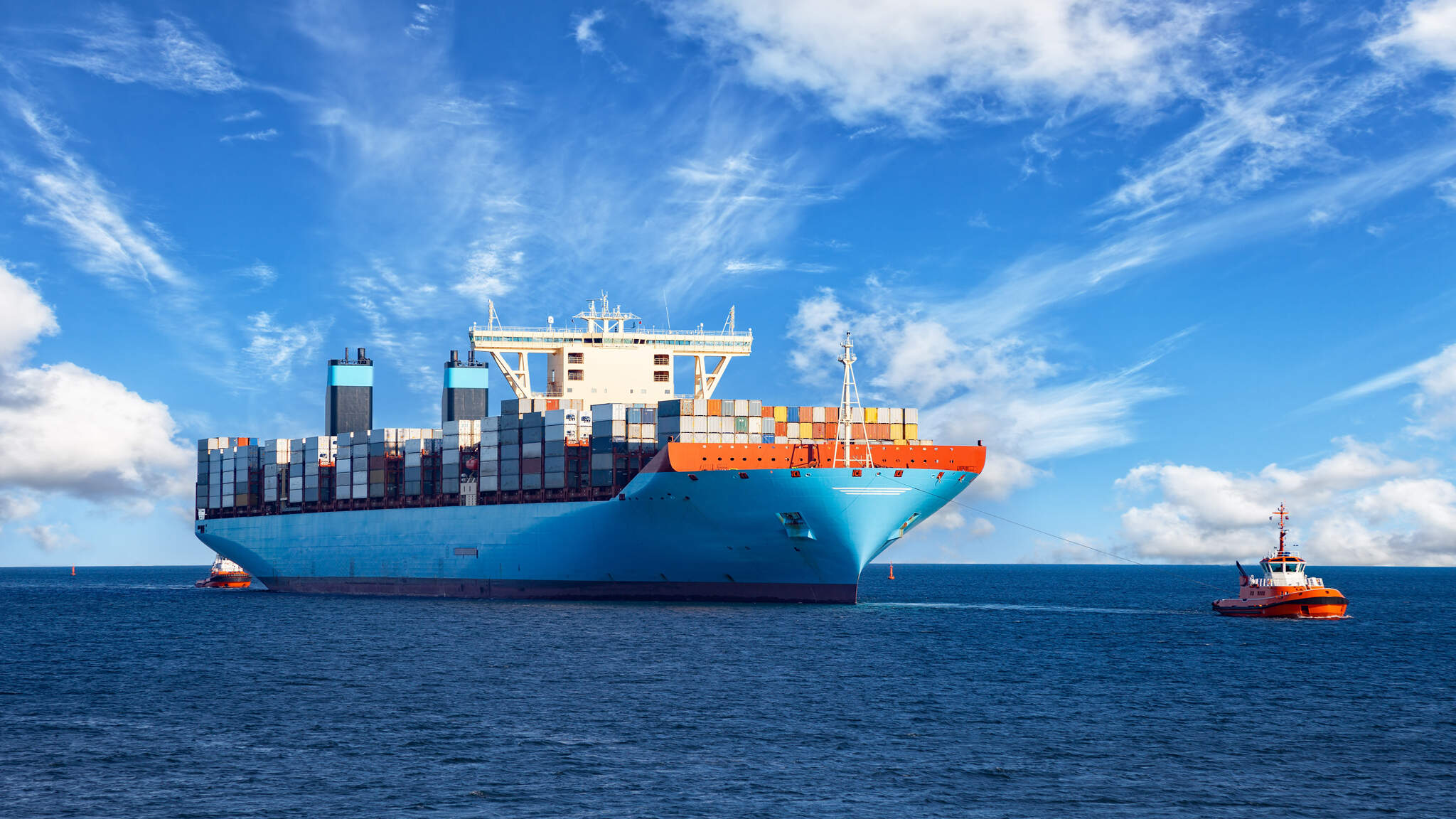
IMO 2020 poses huge challenges for the shipping industry
Cars have their electric motors, hybrid drives, and fuel cells, while in international shipping, IMO 2020 is set to improve the industry’s environmental footprint. According to these International Maritime Organization regulations, as of January 1, 2020, ships will be required to reduce their emissions of sulfur oxides by 85 percent. This applies to all fuels used on the open sea around the world. Currently, the overwhelming majority of container ships, oil tankers, freighters, and cruise ships run on some type of marine fuel oil (MFO). IMO 2020 reduces the limit for sulfur in these fuels to just 0.5 percent, down from 3.5 percent.
International sea transportation generates about one billion metric tons of carbon dioxide each year, which corresponds to 3 percent of all fine particulate matter created by human activity. In light of this, IMO 2020 is an important step towards achieving a better ecological balance sheet for the industry. As a logistics provider, DACHSER does not operate its own ships, but works with major shipping lines like Maersk, Hapag Lloyd, and others.
In the future, these companies will have a number of more environmentally friendly options available to them. For example, they may choose to continue using heavy oil but also install special exhaust gas cleaning systems (scrubbers). Or they may go for a cheaper and more technically feasible option, which is to switch to alternative fuels such as liquefied natural gas (LNG), very low sulfur fuel (VLSF), or marine diesel oil (MDO) sein. The relevant country’s port authority is responsible for compliance with IMO 2020 and can check this with a detector and the ship’s logs. Violators will be subject to fines, ship detention, or even imprisonment.
DACHSER fuel cost model
Regardless of what option shipping operators choose, IMO 2020 poses huge challenges for their industry. Costs will go up, market share may shift among the various sectors (project cargo shipping vs. container ships, bulk carriers, etc.), to say nothing of the expected impact on refineries and global oil markets. Nevertheless, the shipping lines are rising to the challenge—not only because they have to, but because they are pushing themselves to achieve a better ecological balance sheet. Many carriers have already developed models that allow their customers to calculate fuel costs and allocate them to their sources more accurately.
“Naturally we, too, are interested in finding the most sustainable way to handle our transports,” says Rolf Mertins, Head of Global Management Ocean at DACHSER. “At the same time, we want to offer our customers scheduling reliability. That’s why, based on collaboration with our partner carriers, we’ve developed our own fuel cost model, the DACHSER Bunker Adjustment Reference Floater (DBAF).” Replacing the Standard Bunker Factor (SBF), the DBAF is calculated based on the fuel prices of all relevant trades and is intended to ensure that customers’ fuel-related costs are covered irrespective of the carrier option.
Step by step toward the goal — Sea freight groupage containers facilitate the continuous flow of goods
In turbulent economic times, sea freight groupage containers are becoming increasingly popular. Production bottlenecks, fragile global supply chains, and a container shortage have further increased the demand for small and predictable shipment sizes in sea freight. Michael Kriegel, Department Head DACHSER Chem Logistics, explains the service that enables a reliable flow of goods in sea freight. He also talks about why a good network connection is crucial, especially for goods with high security requirements.
Sea freight groupage containers facilitate the continuous flow of goods
Companies are already analyzing their global supply chains and increasingly shifting their shipments to sea freight groupage (called “less than container load,” or LCL for short). The big advantage of groupage for customers is that they can ship smaller loads without having to pay for a full container. As a result, they can maintain a continuous flow of goods, even in the event of production bottlenecks, and also respond more flexibly to seasonal fluctuations. LCL containers are often prioritized over full containers in the loading process, which provides an additional time advantage and allows for better planning of transportation times. DACHSER markets what it calls “consolidation boxes” - customers pay only for the space they actually occupy in the containers. In addition, the company plans departures weeks in advance rather than only once production volumes are known. This means that containers, which are still in short supply, can be pre-booked in good time and customers retain flexibility when booking.
Many companies, especially in the automotive, life science, and healthcare industries, have been using groupage shipments by sea for years. But this service is also suitable for the chemical industry, which places particularly high demands on safety and transparency during transport - and thus needs a logistics provider with the appropriate experience. DACHSER is one such provider. It set up a purchasing partnership with the German Chemical Industry Association (Verband der Chemischen Industrie e.V., or VCI) in 2009. This successful alliance for European groupage shipments from Germany was then expanded in 2015 to include air and sea freight. Member companies of the association now benefit from globally standardized core services in the groupage network - transport, warehousing, and IT solutions. All this specialist industry experience has been pooled in the DACHSER Chem Logistics team.
“In shipments from customers in the chemical industry, which sometimes contain dangerous goods, the decisive factor is always safety. We have to protect life, limb, and the environment,” says Claus Freydag, Managing Director DACHSER Air & Sea Logistics Germany. “DACHSER also boasts global dangerous goods expertise in the groupage container segment and covers all LCL-compatible IMO classes in its own network and in its partner network,” he adds. The company’s central dangerous goods management system and its more than 250 regional safety advisors monitor compliance with special regulations governing the transport of dangerous goods. In addition, many DACHSER employees are trained annually in the particular requirements of chemical logistics.
For sea freight groupage, the sea freight team consolidates various LCLs and loads them into a full container. This optimizes utilization of container capacity, which in turn provides the basis for economical transport costs. Maximum utilization also improves transport sustainability while reducing the risk for individual companies at a time when supply chains are fragile. “Ports around the world have been clogged for months, causing significant delays - and making it rare, if not impossible, for shipping companies to stay on schedule. Instead of sending a full container on its way, which can get held up if loading windows are missed, more and more customers are opting for sea freight groupage containers. This reduces their risk by spreading it over several departures and ships and ensures a more timely transport,” Freydag explains.
Intelligent logistics solutions and a strong network are crucial
Demand for LCL services will continue to grow, even apart from the impact of the pandemic. That’s why DACHSER, as a market leader in the German and European groupage market, has also expanded its maritime LCL network to include 70 weekly direct services to and from Germany. “With a focus on the main global routes, we are systematically expanding our dangerous goods capacity as well. This of course means serving the major markets in both the eastern and western hemispheres, such as China, India, and the US,” Freydag says. In 2021, DACHSER shipped around 19,700 cbm of dangerous goods as LCL with customers in the chemical industry. Dangerous goods thus already represent 15 percent of DACHSER ASL Germany’s LCL business. In addition to the usual port-to-port services, DACHSER also operates various direct import services to the hinterland or other European cities. For example, once a week LCL groupage containers travel directly from port locations such as Hong Kong, Shanghai, and Ningbo to ports such as Hamburg and Bremen - but also with direct loading to Frankfurt, Kaufbeuren, Cologne, Munich, Nuremberg, Stuttgart as well as Copenhagen and Gothenburg. Direct loading minimizes the risk of cargo damage and provides additional safety by eliminating deconsolidation at the transit terminal.
Furthermore, this increases profitability and achieves additional lead time advantages by rectifying bottlenecks in the port. “DACHSER’s global network connects all groupage transports on land and water. We link our own sea freight groupage container services to and from Germany to the comprehensive range of services offered by DACHSER European Logistics, thus enabling end-to-end service throughout Europe,” Freydag says. For storage and unloading, DACHSER is increasingly using its own branch infrastructure in addition to the standard container freight stations (CFS) at the ports. When port capacity is limited, companies thus benefit from additional dispatch quality and shorter transit times.
This concept, in keeping with the idea of “everything from a single source” links the European overland transport network with the global sea freight network - a feature that not every company can offer. “Thanks to the end-to-end solution of our LCL product, which goes beyond just sea transport, we can maintain high quality across the aforementioned carriers and offer transparent traceability of the goods,” Freydag adds.
The past two years have seen risk minimization in the global movement of goods become a crucial factor for success. To take full advantage of LCL shipping, it is crucial that pick-up and onward carriage are also handled in an integrated manner, thus ensuring expertise in the safe transport of dangerous goods along the entire transport route.
Dachser SA delivers specialist pharmaceutical logistics for Dr Reddy’s
The partnership between multinational pharmaceutical company Dr Reddy’s and Dachser, one of the global leaders in system logistics, started in 2011 in Hyderabad, India, when the supply chain tender was awarded to Dachser India. Soon afterwards, Dachser South Africa delivered the first local shipment and has since supported the continuous growth of Dr Reddy’s in the country.
Due to the ongoing disruption of the sea freight market, the after-effects (container shortages and frequent port congestion) continue to impact global supply chains. Below, we provide an update on all developments to minimize potential disruptions to your business.
US West Coast / San Pedro Bay / Port of Los Angeles
The situation in the US has improved over the last 6 weeks, but there are still several container ships queuing in San Pedro Bay to enter the port to be unloaded.
The impact can still be seen in the sea freight inland logistics chain. The constant and high volume of loaded containers flowing into the U.S. continues to make it difficult to relieve the existing backlog.
Suez Canal
Although this incident occurred more than 10 weeks ago, sea freight traffic is still out of balance due to the so-called "ripple effects."
After the unblocking of the Suez Canal, European ports were first congested due to the sudden and high inbound volume. This was followed by the Asian ports, especially the Chinese ports.
Ports of Hamburg and Bremerhaven / Rotterdam
Due to the blockade of the Suez Canal and the aforementioned "ripple effects", operations at the ports of Hamburg and Bremerhaven were also out of balance.
Due to this congestion, shipping companies were induced to re-route ships to Wil-helmshaven or to Rotterdam.
Within the Rotterdam operation, delays are now also expected, possibly leading to disruptions in port operations.
Ports of Yantian / Shekou / Nansha
Delays are occurring in the South China region (Yantian / Shekou / Nansha, etc.) due to restricted port operations. It is expected that the resumption of regular operations will have to be done gradually and that full capacity cannot be reached in the foreseeable future.
We are in close contact with carriers and service providers on a daily basis and do our best to make your supply chain as smooth as possible. For individual advice, please contact your local representative of DACHSER so that we can implement the best logistics solution for you.
On January 1, 2021, DACHSER joined the German Hydrogen and Fuel Cell Association (DWV), a lobbying group that has been advocating the rapid deployment of hydrogen as an energy source and promoting fuel-cell technology since 1996. DACHSER will also participate in DWV’s HyLogistics cluster.