
Select a topic above and receive regularly updates by email.
Subscribe to these filters
Receive regularly updates of the selected filters by email.
Your subscription has been created successfully
For your security you need to activate your subscription. We have sent the activation link to your e-mail address.
Data validation failed on server.
Unfortunately, the validation of your entered data failed on server.
IP-adress denied
Unfortunately, your IP is blocked for about 1 minute. You have sent too many requests.
General system error
Unfortunately, there was a problem processing your request. Please try again later.
"We have set the course"
2021 was a year of diverse challenges that DACHSER was able to master with great stability and resilience. At the same time, the company set an important strategic course, particularly with regard to its climate protection activities. Here is a text from CEO Burkhard Eling.
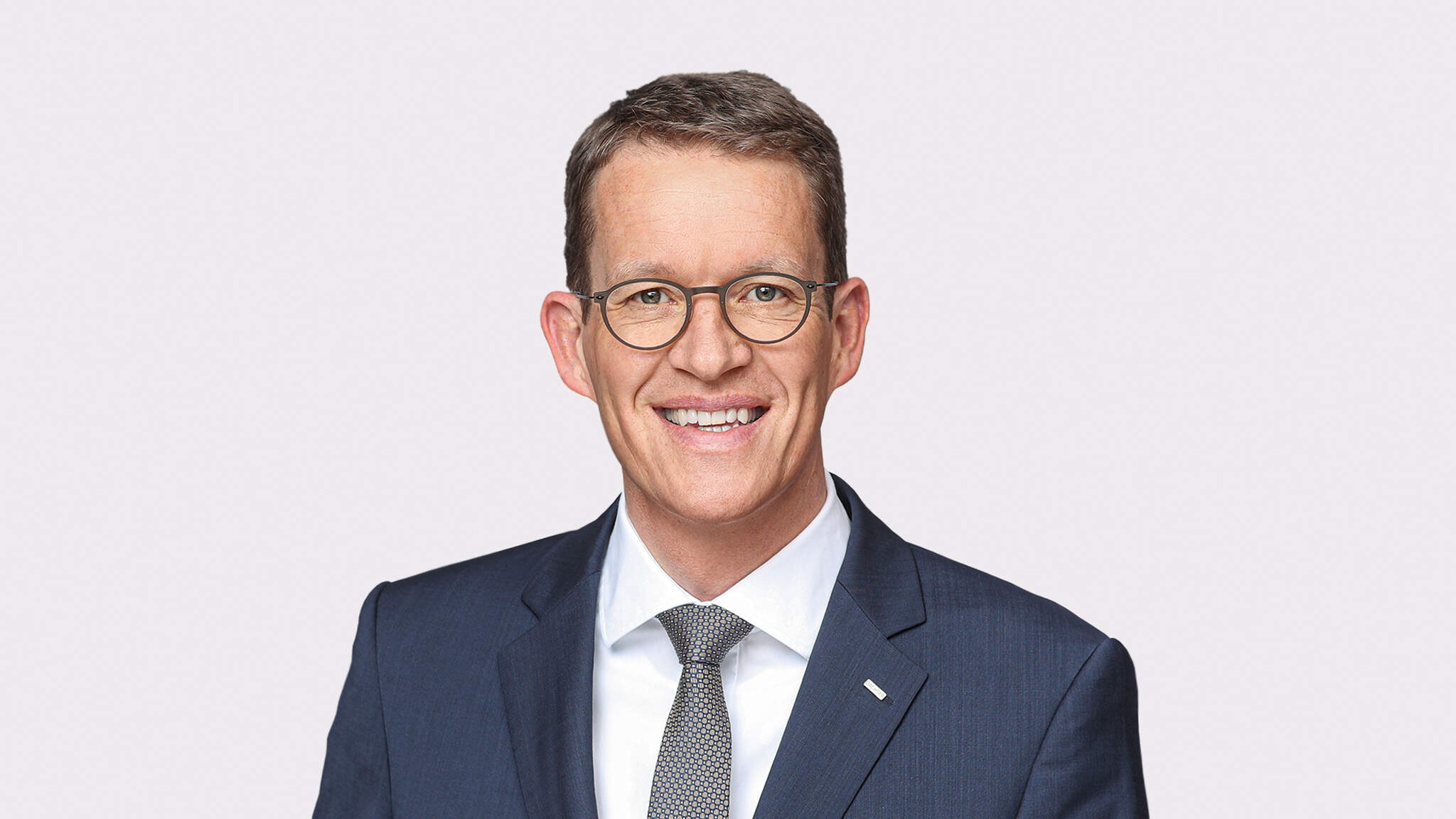
Burkhard Eling, CEO DACHSER
The year 2021 was the year of supply chain bottlenecks. The upheaval resulting from the coronavirus pandemic, as well as extreme weather and the blocking of the Suez Canal, have shone such a bright light on existing weaknesses in global logistics infrastructure that some people are now talking of a “new shortage economy”—and it is putting economic growth at risk.
Nevertheless, we are a strong team, so together with our customers and partners we have successfully managed to keep global supply chains running and to deliver high quality. This is what our resilient network is designed for. At the same time, we have set a strategic course this year that equips us to tackle the issues of the future.
COP26, the UN Climate Change Conference held this year in Glasgow, brought one of these issues into focus. Over the coming years, the pursuit of greater sustainability will be the main force determining the global agenda. Our industry is no exception; the political course for more sustainable logistics has long been set. The road ahead will be challenging, partly because key technologies are still more or less at the early trial stage.
Ongoing and lasting commitment to sustainability
At DACHSER, we are engaging fully with the issue of climate protection and addressing it proactively: we are currently expanding our emission-free city-center concept to eleven European cities, switching to mega trailers across Europe, and investing in photovoltaics. As of 2022, all our electricity purchases worldwide will be green. Moreover, we will acquire more battery-electric trucks and recharging stations, participate in the testing of hydrogen trucks, and also gradually convert our fleet of company cars.
All these measures are individual steps—but together, they represent our ongoing and lasting commitment to sustainability. We will pursue this path together with customers, employees, vehicle manufacturers, and partners, because the only way to achieve the goals the global community has set itself is by combining our efforts.
Women leading in logistics - Fearless female: Sera Fineberg
While the logistics field still tends to dominated by men, times are changing and the fairer sex is increasingly building successful careers in logistics. DACHSER South Africa is working hard to redress the gender inequalities in the industry. We’re chatting to fearless women who are playing vital roles in the DACHSER South Africa offices.
Sera Fineberg is the Johannesburg Branch Manager of Air and Sea Logistics at DACHSER South Africa and she has been with the company for 28 years. She believes that women should play a big role in the logistics industry.
Overcoming Africa’s logistics challenges: Dachser South Africa's approach to customs
Trade is the lifeblood of any economy, and the smooth operation of customs and trade procedures is critical. However, logistics companies moving goods across the African continent face a unique set of challenges. These include inadequate road and rail networks, poor infrastructure, excessive official and unofficial roadblocks, significant border delays and complex customs and excise. A lack of coordination among multiple government agencies often results in inefficiencies and bottlenecks that hinder the smooth flow of goods across borders.
The establishment of a single market has introduced new distribution systems for customs and excise revenue, which has necessitated adjustments from logistics companies. The secretariat of the African Continental Free Trade Area (AfCFTA) agreement launched an interim trading arrangement with eight qualifying countries (Cameroon, Egypt, Ghana, Kenya, Mauritius, Rwanda, Tanzania and Tunisia) to test the agreement’s provisions while negotiations are ongoing. Although trading under the AfCFTA started in January 2021, commercially significant trade has yet to happen, primarily due to the delayed Phase 1 negotiations on trade in goods and services such as the negotiations on Rules of Origin (RoO).
Regional integration arrangements further complicate matters. For example, the coexistence of the Southern African Customs Union (SACU) and the Common Market for Eastern and Southern Africa (COMESA) poses specific challenges. Intensive documentation requirements, samples for laboratory analysis, complex tariff classification, and valuation delays are some other hurdles that affect trade facilitation.
In this challenging environment, logistics companies play a pivotal role. DACHSER South Africa has been successfully navigating these complexities for over forty years, providing comprehensive logistics and customs management solutions that ensure the smooth movement of goods. “Our commitment is to provide our clients with a holistic and seamless solution and we see ourselves as an extension of their businesses. This means that we take care of all aspects of the transportation, including customs, storing, handling and the safe delivery of goods from origin to destination.”
To deal with customs challenges, DACHSER focuses on compliance, transparency, and adaptability, says DACHSER Managing Director Detlev Duve. "Compliance with local and international customs regulations is essential, requiring a detailed understanding of these laws and regulations. Transparency in operations helps build trust with authorities and clients, while adaptability allows logistics companies to adjust to changing regulations and market conditions."
In order to avoid significant time delays and unforeseen cost implications, Duve says it’s vital that companies involved in international trade understand and comply with changing regulations and requirements. However, getting to grips with regulatory environments be challenging for companies and divert resources away from core business priorities, making a trusted logistics partner an essential part of doing business.
Duve says DACHSER's teams are well-versed in customs regulations and procedures. “We ensure compliance with customs requirements, including correct classification and documentation, which can save customers considerable time. Understanding Incoterms and maintaining a good working relationship with local customs authorities are key components of our approach. We further consider where costs can be saved or passage expedited. For example, certain processes could entitle an importer or exporter to claim back a percentage of duties paid to customs.”
Customs developments have also created some opportunities for logistics companies and clients to streamline their operations. For example, in South Africa, the government has introduced measures such as accredited client statuses for those registered for customs and excise activities.
Global logistics operations like DACHSER are also able to fully leverage technology to improve their customs handling processes. “Our digital tools assist in accurately calculating duties, tracking shipments, and ensuring documentation is correctly filed, reducing the risk of errors and delays,” says Duve.
DACHSER South Africa also offers value-added solutions for clients such as bonded storage, which allows cargo to be stored for up to two years, improving cash flow for importers. The company further provides an option for clients when a portion of imported goods will be directly exported, sparing them from having to pay duty and VAT twice. “If the client does not need to clear the entire shipment, DACHSER South Africa will clear the goods directly into our bond store and no duty or VAT will be paid until the cargo is moved out,” Duve explains. “If a portion of the stock needed to go to an African country, we would move this out with a bonded truck to that country, where the cargo would be cleared.”
While the customs landscape in South Africa and Africa presents formidable challenges, logistics companies like DACHSER South Africa have found ways to navigate these complexities and deliver excellent service to their customers. Now more than ever, the value derived from using an experienced logistics provider in Africa can lead to significant cost savings.
Step by step toward the goal — Sea freight groupage containers facilitate the continuous flow of goods
In turbulent economic times, sea freight groupage containers are becoming increasingly popular. Production bottlenecks, fragile global supply chains, and a container shortage have further increased the demand for small and predictable shipment sizes in sea freight. Michael Kriegel, Department Head DACHSER Chem Logistics, explains the service that enables a reliable flow of goods in sea freight. He also talks about why a good network connection is crucial, especially for goods with high security requirements.
Sea freight groupage containers facilitate the continuous flow of goods
Companies are already analyzing their global supply chains and increasingly shifting their shipments to sea freight groupage (called “less than container load,” or LCL for short). The big advantage of groupage for customers is that they can ship smaller loads without having to pay for a full container. As a result, they can maintain a continuous flow of goods, even in the event of production bottlenecks, and also respond more flexibly to seasonal fluctuations. LCL containers are often prioritized over full containers in the loading process, which provides an additional time advantage and allows for better planning of transportation times. DACHSER markets what it calls “consolidation boxes” - customers pay only for the space they actually occupy in the containers. In addition, the company plans departures weeks in advance rather than only once production volumes are known. This means that containers, which are still in short supply, can be pre-booked in good time and customers retain flexibility when booking.
Many companies, especially in the automotive, life science, and healthcare industries, have been using groupage shipments by sea for years. But this service is also suitable for the chemical industry, which places particularly high demands on safety and transparency during transport - and thus needs a logistics provider with the appropriate experience. DACHSER is one such provider. It set up a purchasing partnership with the German Chemical Industry Association (Verband der Chemischen Industrie e.V., or VCI) in 2009. This successful alliance for European groupage shipments from Germany was then expanded in 2015 to include air and sea freight. Member companies of the association now benefit from globally standardized core services in the groupage network - transport, warehousing, and IT solutions. All this specialist industry experience has been pooled in the DACHSER Chem Logistics team.
“In shipments from customers in the chemical industry, which sometimes contain dangerous goods, the decisive factor is always safety. We have to protect life, limb, and the environment,” says Claus Freydag, Managing Director DACHSER Air & Sea Logistics Germany. “DACHSER also boasts global dangerous goods expertise in the groupage container segment and covers all LCL-compatible IMO classes in its own network and in its partner network,” he adds. The company’s central dangerous goods management system and its more than 250 regional safety advisors monitor compliance with special regulations governing the transport of dangerous goods. In addition, many DACHSER employees are trained annually in the particular requirements of chemical logistics.
For sea freight groupage, the sea freight team consolidates various LCLs and loads them into a full container. This optimizes utilization of container capacity, which in turn provides the basis for economical transport costs. Maximum utilization also improves transport sustainability while reducing the risk for individual companies at a time when supply chains are fragile. “Ports around the world have been clogged for months, causing significant delays - and making it rare, if not impossible, for shipping companies to stay on schedule. Instead of sending a full container on its way, which can get held up if loading windows are missed, more and more customers are opting for sea freight groupage containers. This reduces their risk by spreading it over several departures and ships and ensures a more timely transport,” Freydag explains.
Intelligent logistics solutions and a strong network are crucial
Demand for LCL services will continue to grow, even apart from the impact of the pandemic. That’s why DACHSER, as a market leader in the German and European groupage market, has also expanded its maritime LCL network to include 70 weekly direct services to and from Germany. “With a focus on the main global routes, we are systematically expanding our dangerous goods capacity as well. This of course means serving the major markets in both the eastern and western hemispheres, such as China, India, and the US,” Freydag says. In 2021, DACHSER shipped around 19,700 cbm of dangerous goods as LCL with customers in the chemical industry. Dangerous goods thus already represent 15 percent of DACHSER ASL Germany’s LCL business. In addition to the usual port-to-port services, DACHSER also operates various direct import services to the hinterland or other European cities. For example, once a week LCL groupage containers travel directly from port locations such as Hong Kong, Shanghai, and Ningbo to ports such as Hamburg and Bremen - but also with direct loading to Frankfurt, Kaufbeuren, Cologne, Munich, Nuremberg, Stuttgart as well as Copenhagen and Gothenburg. Direct loading minimizes the risk of cargo damage and provides additional safety by eliminating deconsolidation at the transit terminal.
Furthermore, this increases profitability and achieves additional lead time advantages by rectifying bottlenecks in the port. “DACHSER’s global network connects all groupage transports on land and water. We link our own sea freight groupage container services to and from Germany to the comprehensive range of services offered by DACHSER European Logistics, thus enabling end-to-end service throughout Europe,” Freydag says. For storage and unloading, DACHSER is increasingly using its own branch infrastructure in addition to the standard container freight stations (CFS) at the ports. When port capacity is limited, companies thus benefit from additional dispatch quality and shorter transit times.
This concept, in keeping with the idea of “everything from a single source” links the European overland transport network with the global sea freight network - a feature that not every company can offer. “Thanks to the end-to-end solution of our LCL product, which goes beyond just sea transport, we can maintain high quality across the aforementioned carriers and offer transparent traceability of the goods,” Freydag adds.
The past two years have seen risk minimization in the global movement of goods become a crucial factor for success. To take full advantage of LCL shipping, it is crucial that pick-up and onward carriage are also handled in an integrated manner, thus ensuring expertise in the safe transport of dangerous goods along the entire transport route.
Latest update on DACHSER Air & Sea Logistics operations
With this update DACHSER would like to inform about the current DACHSER Air & Sea Logistics operations across the regions APAC, EMEA and Americas. In the attached document (see download below) it is listed whether a country organization of DACHSER is operational or, if only limited or not at all, why this is the case. Since the situation in the countries may change rapidly, the attached document will be updated on a regular basis and published on our website.