
Women leading in logistics - Fearless female: Marli Wilson
DACHSER South Africa is working hard to redress the gender inequalities in the industry. </span>
While the logistics field still tends to dominated by men, times are changing and the fairer sex is increasingly building successful careers in logistics. DACHSER South Africa is working hard to redress the gender inequalities in the industry. We’re chatting to fearless women who are playing vital roles in the DACHSER South Africa offices.
Operations Manager Marli Wilson believes that if you are passionate and consistent you can accomplish anything and overcome most challenges.
Could you describe a typical day in your job?
As Operations Manager, I am responsible for all departments. I liaise with clients, overseas offices and agents, as well as our staff on a day-to-day basis. I negotiate rates with airlines, shipping lines and haulers and I am in charge of national dangerous goods and all airfreight rates for import and export.
What was the best advice anyone ever gave you?
“Do the same, but differently.”
Who or what is your main motivation?
My family at home and my family at the office is my biggest motivation every day. As a mom, you always need to be there for your family and provide them with the best possible childhood. As a Manager, you need to always look out for your staff and create room for them to grow into the best possible version of themselves.
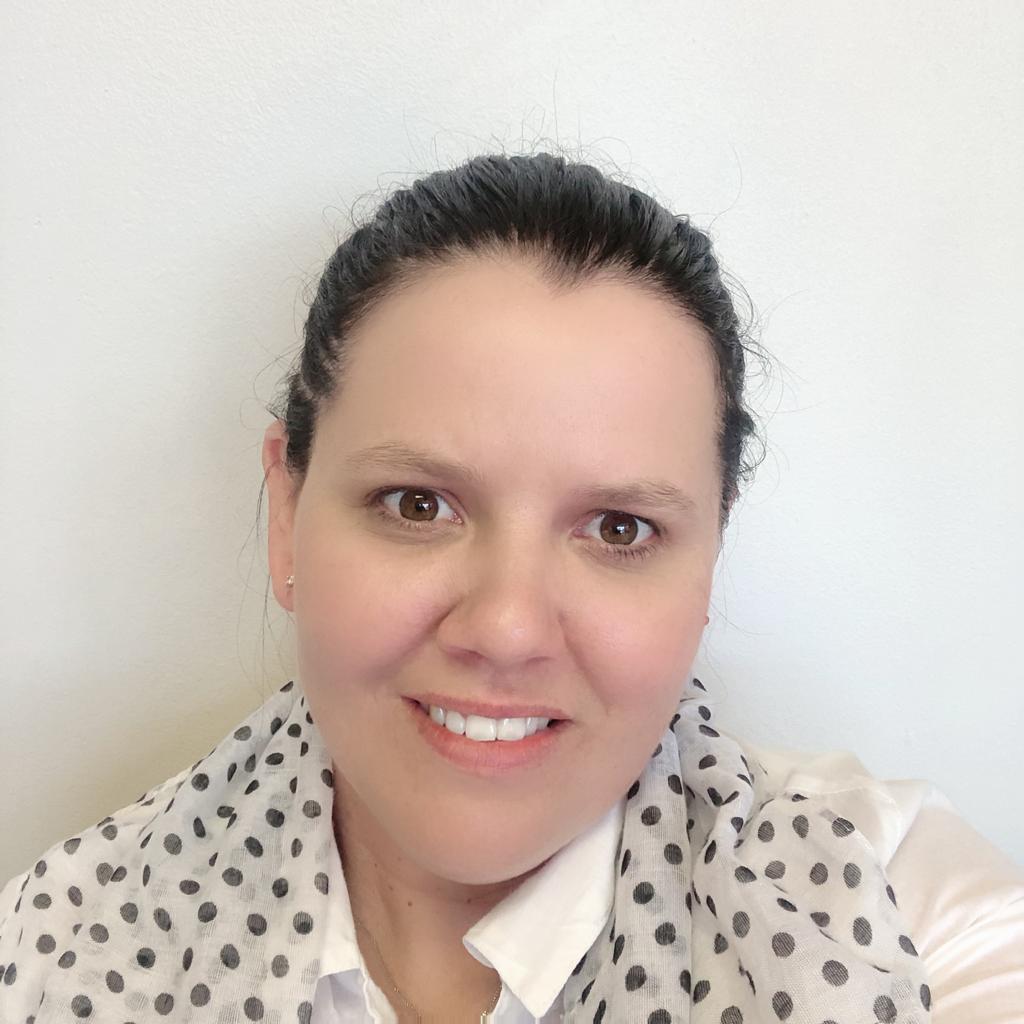
Interview with: Marli Wilson
Operations Manager DACHSER South Africa
What has been the highlight in your career?
To see staff growing from having no knowledge to handling an entire department or shipment on their own with knowledge, guidance and pride. The most exciting aspect of my day is when I see team members solve a query or an issue on their own, with the confidence and skills that their leaders have taught them.
What are the some of the challenges females face in this industry?
We sometimes have to deal with clients that think logistics is still a male-driven industry, so we as women must work twice as hard to win the trust of clients that are used to dealing with men. But this is mostly something of the past, there are a lot of women in senior positions in all industries, not only logistics. I believe that in all cases - Passion + Consistency = Success.
What advice do you have for the future generation of women wanting to get into the logistics space?
“Some succeed because they are destined to, some succeed because they are determined to.”
Step by step toward the goal — Sea freight groupage containers facilitate the continuous flow of goods
In turbulent economic times, sea freight groupage containers are becoming increasingly popular. Production bottlenecks, fragile global supply chains, and a container shortage have further increased the demand for small and predictable shipment sizes in sea freight. Michael Kriegel, Department Head DACHSER Chem Logistics, explains the service that enables a reliable flow of goods in sea freight. He also talks about why a good network connection is crucial, especially for goods with high security requirements.
Sea freight groupage containers facilitate the continuous flow of goods
Companies are already analyzing their global supply chains and increasingly shifting their shipments to sea freight groupage (called “less than container load,” or LCL for short). The big advantage of groupage for customers is that they can ship smaller loads without having to pay for a full container. As a result, they can maintain a continuous flow of goods, even in the event of production bottlenecks, and also respond more flexibly to seasonal fluctuations. LCL containers are often prioritized over full containers in the loading process, which provides an additional time advantage and allows for better planning of transportation times. DACHSER markets what it calls “consolidation boxes” - customers pay only for the space they actually occupy in the containers. In addition, the company plans departures weeks in advance rather than only once production volumes are known. This means that containers, which are still in short supply, can be pre-booked in good time and customers retain flexibility when booking.
Many companies, especially in the automotive, life science, and healthcare industries, have been using groupage shipments by sea for years. But this service is also suitable for the chemical industry, which places particularly high demands on safety and transparency during transport - and thus needs a logistics provider with the appropriate experience. DACHSER is one such provider. It set up a purchasing partnership with the German Chemical Industry Association (Verband der Chemischen Industrie e.V., or VCI) in 2009. This successful alliance for European groupage shipments from Germany was then expanded in 2015 to include air and sea freight. Member companies of the association now benefit from globally standardized core services in the groupage network - transport, warehousing, and IT solutions. All this specialist industry experience has been pooled in the DACHSER Chem Logistics team.
“In shipments from customers in the chemical industry, which sometimes contain dangerous goods, the decisive factor is always safety. We have to protect life, limb, and the environment,” says Claus Freydag, Managing Director DACHSER Air & Sea Logistics Germany. “DACHSER also boasts global dangerous goods expertise in the groupage container segment and covers all LCL-compatible IMO classes in its own network and in its partner network,” he adds. The company’s central dangerous goods management system and its more than 250 regional safety advisors monitor compliance with special regulations governing the transport of dangerous goods. In addition, many DACHSER employees are trained annually in the particular requirements of chemical logistics.
For sea freight groupage, the sea freight team consolidates various LCLs and loads them into a full container. This optimizes utilization of container capacity, which in turn provides the basis for economical transport costs. Maximum utilization also improves transport sustainability while reducing the risk for individual companies at a time when supply chains are fragile. “Ports around the world have been clogged for months, causing significant delays - and making it rare, if not impossible, for shipping companies to stay on schedule. Instead of sending a full container on its way, which can get held up if loading windows are missed, more and more customers are opting for sea freight groupage containers. This reduces their risk by spreading it over several departures and ships and ensures a more timely transport,” Freydag explains.
Intelligent logistics solutions and a strong network are crucial
Demand for LCL services will continue to grow, even apart from the impact of the pandemic. That’s why DACHSER, as a market leader in the German and European groupage market, has also expanded its maritime LCL network to include 70 weekly direct services to and from Germany. “With a focus on the main global routes, we are systematically expanding our dangerous goods capacity as well. This of course means serving the major markets in both the eastern and western hemispheres, such as China, India, and the US,” Freydag says. In 2021, DACHSER shipped around 19,700 cbm of dangerous goods as LCL with customers in the chemical industry. Dangerous goods thus already represent 15 percent of DACHSER ASL Germany’s LCL business. In addition to the usual port-to-port services, DACHSER also operates various direct import services to the hinterland or other European cities. For example, once a week LCL groupage containers travel directly from port locations such as Hong Kong, Shanghai, and Ningbo to ports such as Hamburg and Bremen - but also with direct loading to Frankfurt, Kaufbeuren, Cologne, Munich, Nuremberg, Stuttgart as well as Copenhagen and Gothenburg. Direct loading minimizes the risk of cargo damage and provides additional safety by eliminating deconsolidation at the transit terminal.
Furthermore, this increases profitability and achieves additional lead time advantages by rectifying bottlenecks in the port. “DACHSER’s global network connects all groupage transports on land and water. We link our own sea freight groupage container services to and from Germany to the comprehensive range of services offered by DACHSER European Logistics, thus enabling end-to-end service throughout Europe,” Freydag says. For storage and unloading, DACHSER is increasingly using its own branch infrastructure in addition to the standard container freight stations (CFS) at the ports. When port capacity is limited, companies thus benefit from additional dispatch quality and shorter transit times.
This concept, in keeping with the idea of “everything from a single source” links the European overland transport network with the global sea freight network - a feature that not every company can offer. “Thanks to the end-to-end solution of our LCL product, which goes beyond just sea transport, we can maintain high quality across the aforementioned carriers and offer transparent traceability of the goods,” Freydag adds.
The past two years have seen risk minimization in the global movement of goods become a crucial factor for success. To take full advantage of LCL shipping, it is crucial that pick-up and onward carriage are also handled in an integrated manner, thus ensuring expertise in the safe transport of dangerous goods along the entire transport route.
Efficient management of global supply chains by DACHSER Air & Sea Logistics
In air and sea freight, operational procedures are characterized by a high degree of manual effort and require coordination with numerous contacts. With DACHSER as a logistics partner, customers benefit from digital solutions for more efficient management of their international supply chains. A single point of contact at DACHSER supports and coordinates their simple and fast implementation.
DACHSER's experience does show that more and more companies are taking advantage of digital applications for managing their air and sea freight. In order to provide customers with a suitable digital solution according to their requirements, DACHSER provides a diverse product portfolio. The offer is based on personalized customer solutions such as eLogistics, the central customer platform of DACHSER or standardized EDI applications and web based APIs. Analog processes can thus be replaced, optimized, or direct connections to the IT infrastructure of DACHSER can be created. The global project management by the experts of DACHSER Air & Sea Logistics does not only cover isolated parts but the entire processes and customer requirements along the supply chain are considered. This holistic approach also takes into account the overarching connection to the DACHSER Road Logistics network. For a smooth implementation, the products are tested by simulating use cases before going into operation.
Advantages at a glance:
Nationwide project management and professional consulting by a competent, single point of contact at DACHSER
Transparency and communication throughout the entire project process
Digital, paperless exchange without e-mails: direct transmission of forwarding orders to DACHSER’s transport management system for air and sea freight (Othello)
Sending status and invoice data to the customer's ERP system
Fully automated, time saving and low-disruption processes
Fast and detailed shipment information in real time
Seamless integration via a single, secure source of data, thus avoiding data silos
Customer confidence strengthened: Dachser is satisfied with the year´s results
Virtually no dip in company revenue in 2020, the year blighted by Covid-19, with the strong second half offsetting the impact of the European lockdowns in April and May. Investments of EUR 190 million earmarked for logistics capacity, technical equipment, and digital systems.
Kempten, April 13, 2021 - Dachser can look back on a successful 2020, which was characterized by the loyalty and climate of mutual trust between the logistics provider, its customers, and its transport partners. Dachser’s consolidated net revenue totaled EUR 5.61 billion, a slight decrease of 0.9 percent compared to the previous year.
Even if concrete forecasts are currently difficult, there is cause for cautious optimism. CEO Burkhard Eling on initial trends and an outlook for 2021.