Select a topic above and receive regularly updates by email.
Subscribe to these filters
Receive regularly updates of the selected filters by email.
Your subscription has been created successfully
For your security you need to activate your subscription. We have sent the activation link to your e-mail address.
Data validation failed on server.
Unfortunately, the validation of your entered data failed on server.
IP-adress denied
Unfortunately, your IP is blocked for about 1 minute. You have sent too many requests.
General system error
Unfortunately, there was a problem processing your request. Please try again later.
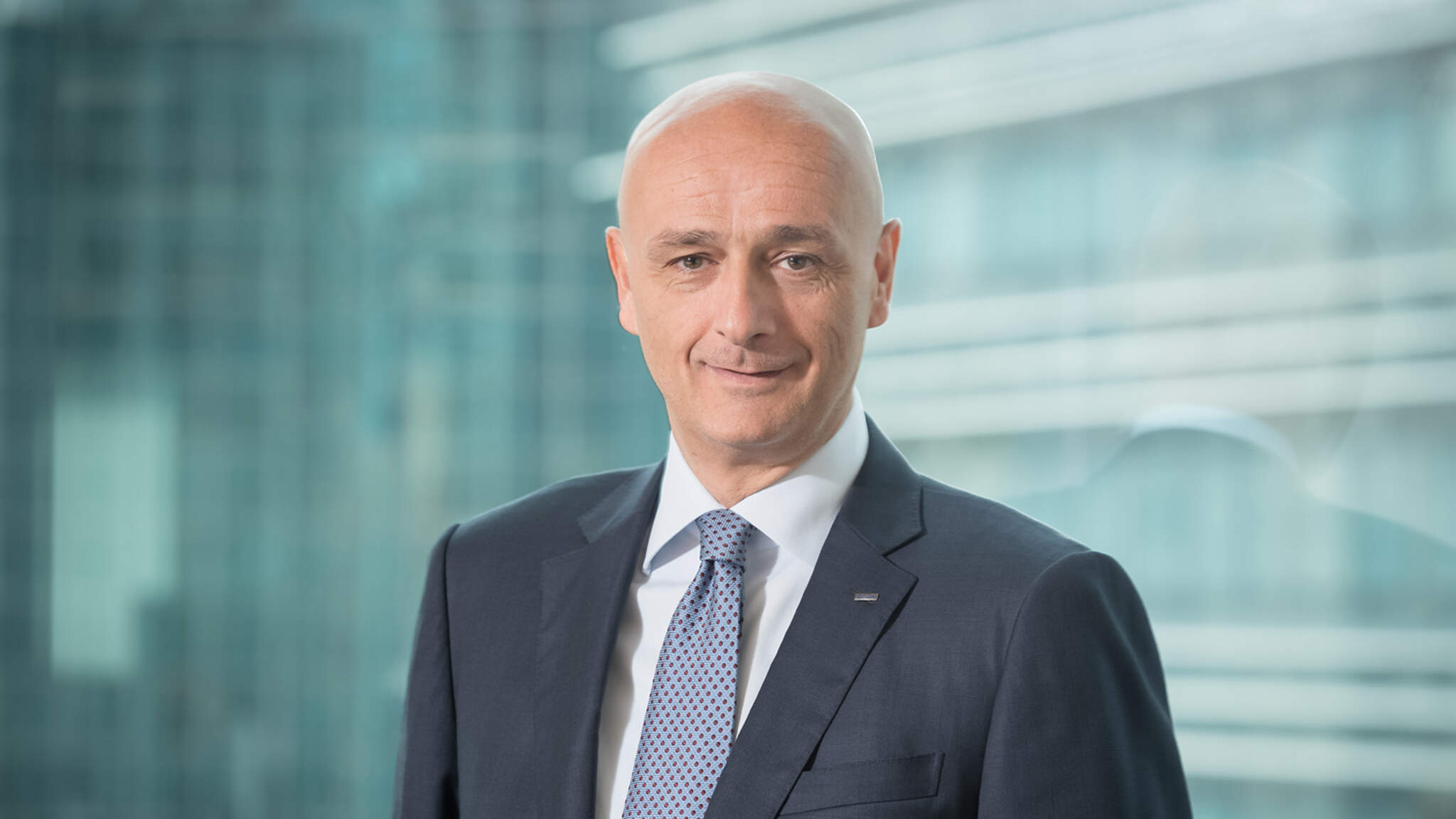
Edoardo Podestá takes the helm of DACHSER Air & Sea Logistics
The long-standing Managing Director of the Asia Pacific region now heads DACHSER's global air and sea freight business. DACHSER appoints Edoardo Podestá as the Chief Operations Officer (COO) of the Air & Sea Logistics business field. Podestá replaces Jochen Müller in this position.
Edoardo Podestá, Chief Operations Officer (COO) of the Business Field DACHSER Air & Sea Logistics
DACHSER and the current COO Air & Sea Logistics, Jochen Müller, have mutually agreed not to extend his contract when it expires in 2020. Jochen Müller will stop working for DACHSER with immediate effect.
Edoardo Podestá combines his success as an entrepreneur and strong leadership skills with his profound knowledge of the Asian and global air and sea freight markets. As COO Air & Sea Logistics, he will continue to expand our intercontinental network for air and sea freight and link it even more closely with our European overland transport network.
Bernhard Simon, CEO DACHSER
In recent years, Jochen Müller was responsible for developing the air and sea freight business into a network company with operations worldwide, thereby putting in place the foundations for globally integrated supply chain solutions for our customers. It is thanks to his commitment that the structures to support the future expansion of the air and sea freight business could be further cemented. DACHSER is grateful to Jochen Müller for all his hard work over the years and for the mutual trust upon which it was based, and wishes him every success in his personal and professional life in the future.
Successful expansion of air and sea freight business in Asia
The job of heading up the global air and sea freight business is going to Edoardo Podestá, a seasoned DACHSER manager. The 57-year-old Italian joined DACHSER back in 2003 as part of the management team for the Züst Ambrosetti Far East Ltd. joint venture after DACHSER had taken full control. In recognition of his successful expansion of the air and sea freight business in Asia, he was appointed Managing Director of the Asia Pacific business unit in 2014.
Step by step toward the goal — Sea freight groupage containers facilitate the continuous flow of goods
In turbulent economic times, sea freight groupage containers are becoming increasingly popular. Production bottlenecks, fragile global supply chains, and a container shortage have further increased the demand for small and predictable shipment sizes in sea freight. Michael Kriegel, Department Head DACHSER Chem Logistics, explains the service that enables a reliable flow of goods in sea freight. He also talks about why a good network connection is crucial, especially for goods with high security requirements.
Sea freight groupage containers facilitate the continuous flow of goods
Companies are already analyzing their global supply chains and increasingly shifting their shipments to sea freight groupage (called “less than container load,” or LCL for short). The big advantage of groupage for customers is that they can ship smaller loads without having to pay for a full container. As a result, they can maintain a continuous flow of goods, even in the event of production bottlenecks, and also respond more flexibly to seasonal fluctuations. LCL containers are often prioritized over full containers in the loading process, which provides an additional time advantage and allows for better planning of transportation times. DACHSER markets what it calls “consolidation boxes” - customers pay only for the space they actually occupy in the containers. In addition, the company plans departures weeks in advance rather than only once production volumes are known. This means that containers, which are still in short supply, can be pre-booked in good time and customers retain flexibility when booking.
Many companies, especially in the automotive, life science, and healthcare industries, have been using groupage shipments by sea for years. But this service is also suitable for the chemical industry, which places particularly high demands on safety and transparency during transport - and thus needs a logistics provider with the appropriate experience. DACHSER is one such provider. It set up a purchasing partnership with the German Chemical Industry Association (Verband der Chemischen Industrie e.V., or VCI) in 2009. This successful alliance for European groupage shipments from Germany was then expanded in 2015 to include air and sea freight. Member companies of the association now benefit from globally standardized core services in the groupage network - transport, warehousing, and IT solutions. All this specialist industry experience has been pooled in the DACHSER Chem Logistics team.
“In shipments from customers in the chemical industry, which sometimes contain dangerous goods, the decisive factor is always safety. We have to protect life, limb, and the environment,” says Claus Freydag, Managing Director DACHSER Air & Sea Logistics Germany. “DACHSER also boasts global dangerous goods expertise in the groupage container segment and covers all LCL-compatible IMO classes in its own network and in its partner network,” he adds. The company’s central dangerous goods management system and its more than 250 regional safety advisors monitor compliance with special regulations governing the transport of dangerous goods. In addition, many DACHSER employees are trained annually in the particular requirements of chemical logistics.
For sea freight groupage, the sea freight team consolidates various LCLs and loads them into a full container. This optimizes utilization of container capacity, which in turn provides the basis for economical transport costs. Maximum utilization also improves transport sustainability while reducing the risk for individual companies at a time when supply chains are fragile. “Ports around the world have been clogged for months, causing significant delays - and making it rare, if not impossible, for shipping companies to stay on schedule. Instead of sending a full container on its way, which can get held up if loading windows are missed, more and more customers are opting for sea freight groupage containers. This reduces their risk by spreading it over several departures and ships and ensures a more timely transport,” Freydag explains.
Intelligent logistics solutions and a strong network are crucial
Demand for LCL services will continue to grow, even apart from the impact of the pandemic. That’s why DACHSER, as a market leader in the German and European groupage market, has also expanded its maritime LCL network to include 70 weekly direct services to and from Germany. “With a focus on the main global routes, we are systematically expanding our dangerous goods capacity as well. This of course means serving the major markets in both the eastern and western hemispheres, such as China, India, and the US,” Freydag says. In 2021, DACHSER shipped around 19,700 cbm of dangerous goods as LCL with customers in the chemical industry. Dangerous goods thus already represent 15 percent of DACHSER ASL Germany’s LCL business. In addition to the usual port-to-port services, DACHSER also operates various direct import services to the hinterland or other European cities. For example, once a week LCL groupage containers travel directly from port locations such as Hong Kong, Shanghai, and Ningbo to ports such as Hamburg and Bremen - but also with direct loading to Frankfurt, Kaufbeuren, Cologne, Munich, Nuremberg, Stuttgart as well as Copenhagen and Gothenburg. Direct loading minimizes the risk of cargo damage and provides additional safety by eliminating deconsolidation at the transit terminal.
Furthermore, this increases profitability and achieves additional lead time advantages by rectifying bottlenecks in the port. “DACHSER’s global network connects all groupage transports on land and water. We link our own sea freight groupage container services to and from Germany to the comprehensive range of services offered by DACHSER European Logistics, thus enabling end-to-end service throughout Europe,” Freydag says. For storage and unloading, DACHSER is increasingly using its own branch infrastructure in addition to the standard container freight stations (CFS) at the ports. When port capacity is limited, companies thus benefit from additional dispatch quality and shorter transit times.
This concept, in keeping with the idea of “everything from a single source” links the European overland transport network with the global sea freight network - a feature that not every company can offer. “Thanks to the end-to-end solution of our LCL product, which goes beyond just sea transport, we can maintain high quality across the aforementioned carriers and offer transparent traceability of the goods,” Freydag adds.
The past two years have seen risk minimization in the global movement of goods become a crucial factor for success. To take full advantage of LCL shipping, it is crucial that pick-up and onward carriage are also handled in an integrated manner, thus ensuring expertise in the safe transport of dangerous goods along the entire transport route.
New environmental guidelines from the International Maritime Organization for global shipping traffic will take effect in January 2020. Read on to find out what it’s all about.
Dachser in Africa - the family business grows its global network
Growing logistics provider Dachser has more employees than at any other point in its history: some 30.603 people around the world are employed by the family-owned company based in Kempten, Germany. Dachser South Africa is home to 240 of these employees working across four branches, involved at any given time in connecting the flow of commodities, information, and transport companies with each other.
The future Executive Board team, to be headed by Burkhard Eling, takes over on January 1, 2021; Bernhard Simon and Michael Schilling will join the Supervisory Board in 2021